
What Specialist Diagnoses POTS and How It Works
You feel dizzy, your heart is racing, and constant fatigue is draining your life. If you suspect Postural Orthostatic Tachycardia Syndrome (POTS), you know the diagnostic journey can be frustrating, often involving multiple, dead-end specialist visits. The key to accurate diagnosis and effective treatment, however, lies with one specific type of doctor. Ready to stop searching? We reveal exactly what specialist diagnoses pots and why seeing this expert is the most crucial step toward finally managing your condition.
TL;DR
POTS diagnosis requires a sustained heart rate increase upon standing, confirmed by the Tilt Table Test. Specialists, including Cardiologists and Neurologists, manage personalized treatment focused on increasing blood volume (salt/hydration) and supervised exercise.
Speak with a qualified pots specialist NYC
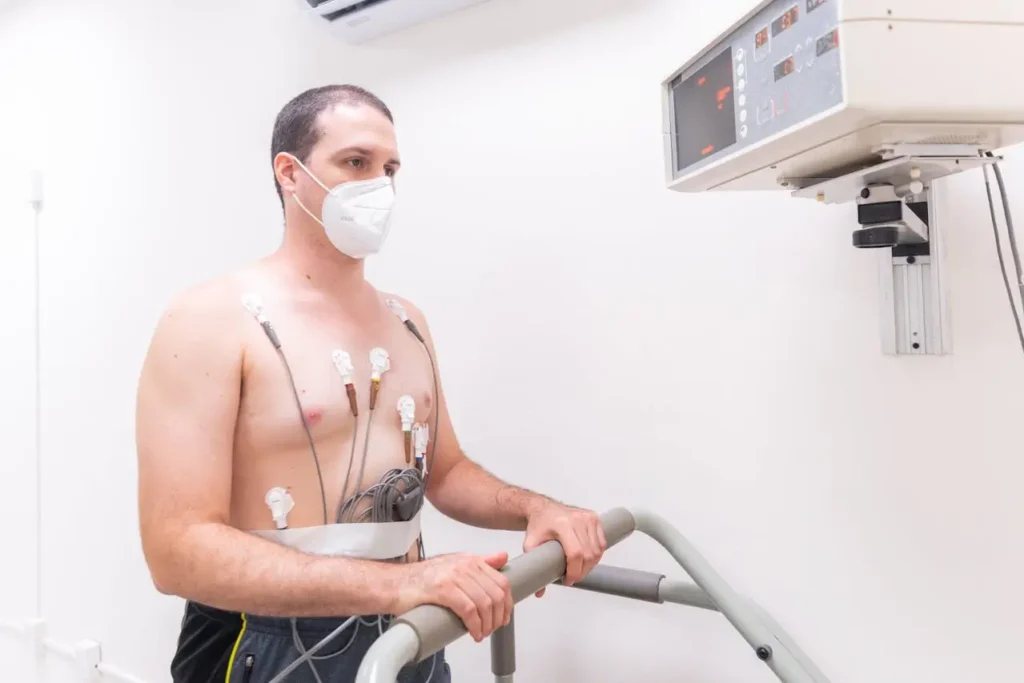
Which Doctors Treat POTS Symptoms Effectively?
Effective treatment requires a multidisciplinary approach, as it affects the autonomic nervous system and various organs. The central specialists in management are Cardiologists, due to tachycardia upon standing, and Neurologists, particularly those with experience in dysautonomia.
Within the cardiac field, Electrophysiologists are essential for treating accelerated heart rhythm symptoms. Additionally, Physical Medicine and Rehabilitation Specialists are vital in developing structured exercise plans. These programs aim to improve orthostatic tolerance, a cornerstone of long-term management.
The Primary Care Physicians are fundamental for managing initial treatment and coordinating the patient’s complex care. Given the multisystemic nature, other specialists may also be necessary. These include Gastroenterologists, Endocrinologists if hormonal components are present, or Rheumatologists if the condition is associated with disorders like Ehlers-Danlos syndrome.
Initial POTS Symptom Assessment
The initial assessment focuses on identifying an excessively rapid heart rate upon standing, coupled with chronic symptoms that typically improve when lying down. To establish the diagnosis, professionals rely on the patient’s medical history, a detailed physical exam, and specific orthostatic tests (posture changes).
POTS symptoms usually appear or intensify when standing (orthostatism) and are varied. The central manifestation is Tachycardia, characterized by rapid heartbeats or palpitations, defined by an increase of more than 30 beats per minute (bpm) in adults or more than 40 bpm in adolescents, measured within the first 10 minutes of standing.
In addition to tachycardia, patients experience a range of symptoms that significantly improve when lying down. These include:
- Dizziness and lightheadedness: A sensation of fainting or vertigo.
- Extreme fatigue: Intense tiredness that is not relieved by rest.
- Brain fog: Difficulty concentrating or thinking clearly.
- Other associated symptoms: Blurred vision, nausea, headache, chest pain, tremors, and extremities that may feel cold or look bluish.
The initial assessment process focuses on the abnormal heart rate response to posture change (orthostatism) along with the presence of chronic debilitating symptoms. Recognizing these criteria and symptoms is the essential first step for specialists to proceed with definitive diagnostic testing and establish an appropriate treatment plan.
Primary Care Referral Process
As a disorder of the autonomic nervous system, when this condition is suspected, the primary care referral process focuses on three fundamental steps: establishing the clinical diagnosis, ruling out other possible causes of the symptoms, and initiating conservative measures.
| Category | Detail |
| Clinical Suspicion (Primary Care) | Based on symptoms of orthostatic intolerance persisting for more than 6 months (or 3 months according to expert guidelines). |
| Confirmation Test (Orthostatism) | Tilt Table Test or Active Stand Test: Diagnosis is confirmed if there is a sustained increase in heart rate within the first 10 minutes of standing, in the absence of severe orthostatic hypotension. |
| Required Initial Evaluation (Before Referral) | The primary care physician must perform:Detailed medical history (symptom frequency, triggering factors like infections, pregnancy, trauma)12-lead Electrocardiogram (ECG) (to rule out arrhythmias or structural heart disease)Blood analysis (to exclude anemia, thyroid dysfunction, or dehydration). |
Primary care is vital as the first filter, not only to identify suspicion through clinical criteria and orthostatic tests but also to ensure that other serious or treatable conditions are ruled out. Once this initial evaluation is complete, the referral to specialists like Cardiologists or Neurólogos is streamlined, ensuring the patient receives precise and coordinated care.
Cardiologist Diagnostic Evaluation
The diagnostic evaluation by the cardiologist focuses on identifying clinical signs compatible with POTS and ruling out other heart conditions. The primary goal is to confirm the increase in heart rate upon standing and perform an adequate differential diagnosis.
- Medical history and physical examination: Evaluation of symptoms such as palpitations, dizziness, fatigue, and chest pain related to postural changes.
- Initial diagnostic criteria: Increase of ≥30 bpm in adults (≥40 bpm in adolescents) upon standing, without severe hypotension.
- Holter Monitoring: Continuous ECG recording to detect sinus tachycardia throughout the day.
- Echocardiogram: Used to rule out structural heart diseases.
- Differential diagnosis: Exclusion of arrhythmias, syncope from other causes, and cardiac pathologies.
This comprehensive evaluation allows for the identification of whether the symptoms have a cardiac origin or if they correspond to autonomic dysfunction, once other pathologies have been ruled out.
Autonomic Testing Procedures
Diagnosis requires specialized autonomic nervous system tests, designed to precisely measure the body’s response to posture change and confirm orthostatic intolerance.
- Tilt Table Test: Key test that simulates the transition from lying down to standing while monitoring vital signs.
- Standing Test (Active Stand Test): Measurement of heart rate and blood pressure after standing for 10 minutes.
- Valsalva Maneuver: Evaluates the autonomic response to forced expiratory effort.
- Sweat Tests (QSART/TST): Analyze peripheral autonomic function.
- Catecholamine Measurement: Detects possible elevated levels associated with a hyperadrenergic component.
These tests confirm the diagnosis and differentiate it from other dysautonomias, providing a more accurate assessment of autonomic nervous system function.
Treatment Plan Coordination
Treatment coordination is multimodal and interdisciplinary, focusing on symptom management, increasing blood volume, and improving physical conditioning. The first measures focus on increasing water intake (3-4 L/day)and salt, also using compression stockings to reduce venous pooling.
Physical exercise should be progressive and supervised, starting with reclined activities (swimming or rowing) to avoid syncope. Pharmaceutical treatment includes beta-blockers for tachycardia, Fludrocortisone and Midodrine for blood volume, in addition to Ivabradina to reduce heart rate.
An interdisciplinary team, involving cardiology, neurology, and physical therapy for cardiac rehabilitation. Management requires the expertise of dysautonomia specialists to control heart rate and “brain fog.” The treatment plan must be customized for each patient.
Key Takeaways
- Diagnosis is based on specific heart rate criteria and testing. The POTS diagnosis requires a sustained heart rate increase of ≥30 bpm in adults (≥40 bpm in adolescents) upon standing, without severe hypotension. The primary diagnostic tool is the Tilt Table Test.
- Effective treatment requires a multidisciplinary team of specialists. Management involves Cardiologists (for tachycardia), Neurologists (for dysautonomia expertise), and Physical Medicine Specialists (for rehabilitation). Primary Care Physicians coordinate the complex, interdisciplinary care.
- Primary care serves as the essential first step for clinical filtering. Primary care physicians screen for POTS using orthostatic symptoms lasting over six months and must rule out other diseases (e.g., arrhythmias, anemia, thyroid dysfunction) with an ECG and blood analysis before referring to a specialist.
- Specialized autonomic testing confirms the diagnosis. Advanced procedures like the Tilt Table Test, Valsalva Maneuver, and sweat tests are essential to document the body’s cardiovascular response to posture changes and accurately differentiate POTS from other forms of dysautonomia.
- Treatment prioritizes non-pharmacological, personalized interventions. First-line treatment involves increasing hydration (3-4 L/day) and salt intake, using compression garments, and supervised, progressive exercise (starting with reclined activities). Medications are used selectively to control heart rate and blood volume.
FAQs
Is it better to see a cardiologist or neurologist for POTS?
Both specialists can evaluate POTS, but cardiologists are often the first step to assess heart rate changes and rule out cardiac conditions. Neurologists are helpful when autonomic or neurological symptoms are prominent. Ideally, care is guided by a specialist experienced in autonomic disorders.
What is the best doctor to see for POTS?
The best doctor is one with experience in diagnosing and managing POTS, often a cardiologist or neurologist with autonomic expertise. Many patients benefit from a multidisciplinary approach, starting with primary care and involving specialists as needed. The focus is on accurate diagnosis and personalized treatment.
What confirms a POTS diagnosis?
A POTS diagnosis is confirmed by a sustained increase in heart rate of at least 30 bpm (40 bpm in adolescents) within 10 minutes of standing, without significant blood pressure drop. Tests like the tilt table or standing test help document this response. Symptoms must be consistent and present over time.
Why is everyone suddenly getting POTS?
The rise in POTS cases is linked to increased awareness and better recognition, along with triggers like viral illnesses. More people are being properly diagnosed rather than the condition being new. This has made POTS appear more common in recent years.
Sources
- Boris, J. R., Shadiack III, E. C., McCormick, E. M., MacMullen, L., George‐Sankoh, I., & Falk, M. J. (2024). Long‐term POTS outcomes survey: diagnosis, therapy, and clinical outcomes. Journal of the American Heart Association, 13(14), e033485.
https://www.ahajournals.org/doi/full/10.1161/JAHA.123.033485
- Olshansky, B., Cannom, D., Fedorowski, A., Stewart, J., Gibbons, C., Sutton, R., … & Benditt, D. G. (2020). Postural orthostatic tachycardia syndrome (POTS): a critical assessment. Progress in cardiovascular diseases, 63(3), 263-270.
https://www.sciencedirect.com/science/article/abs/pii/S0033062020300669