
Can a Primary Care Doctor Prescribe Anxiety Medication? What Patients Need to Know in 2026
Last updated: May 19, 2026
Quick Answer
Yes, a primary care doctor can prescribe anxiety medication. In the United States, primary care physicians (PCPs), internal medicine doctors, and family nurse practitioners are all legally authorized to evaluate anxiety symptoms and prescribe FDA-approved medications — including SSRIs, SNRIs, and buspirone — as first-line treatments. You do not need a psychiatrist referral to start treatment, though complex or treatment-resistant cases may benefit from specialist involvement.
Talk to family doctor in Brooklyn Now
Key Takeaways
- Primary care doctors can and routinely do prescribe anxiety medication, including SSRIs like sertraline and SNRIs like venlafaxine.
- First-line anxiety medications are generally non-controlled substances and are well within a PCP’s scope of practice.
- Benzodiazepines (like Xanax) can be prescribed by PCPs but are typically reserved for short-term or situational use due to dependency risks.
- If your anxiety is severe, treatment-resistant, or involves a complex psychiatric history, your PCP may refer you to a psychiatrist.
- Most anxiety medications take 2 to 6 weeks to produce noticeable effects.
- Non-medication options — including therapy, lifestyle changes, and integrative approaches — are valid and often used alongside medication.
- Telling your doctor the truth about your symptoms is the fastest path to effective treatment.
- At IDCC Health Services in Brooklyn, primary care physicians and on-site psychiatrists work together, so patients can get coordinated anxiety care without leaving the practice.
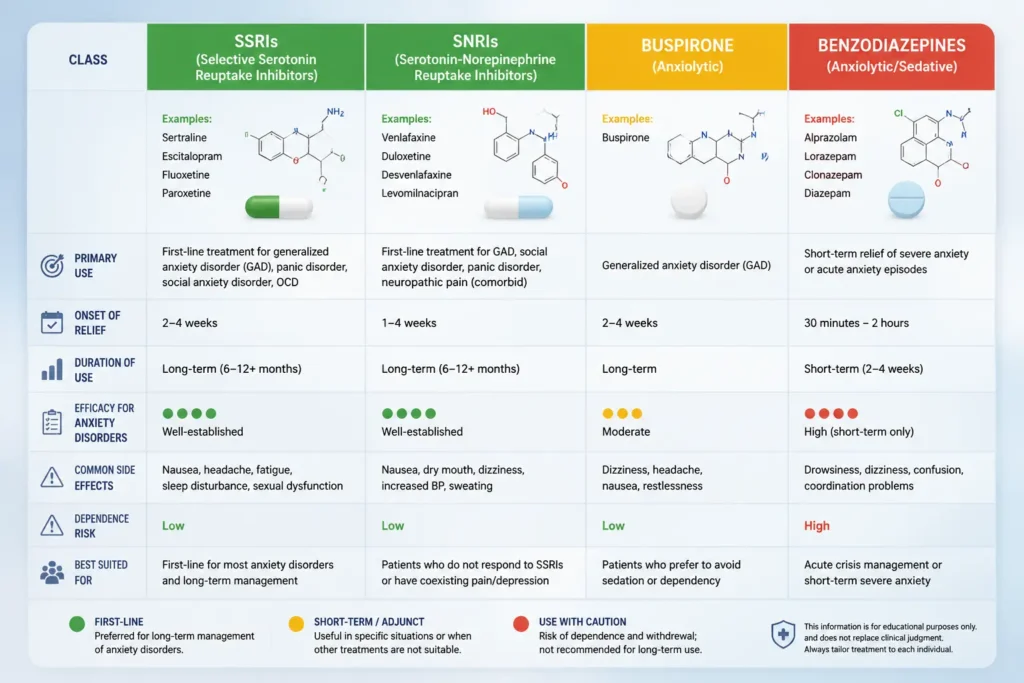
Can a Primary Care Doctor Prescribe Anxiety Medication? The Direct Answer
Yes — and this happens every day in primary care offices across the country. Anxiety disorders are among the most common conditions primary care doctors manage. According to the Anxiety and Depression Association of America (ADAA), anxiety disorders affect roughly 40 million adults in the United States, and the majority of those patients first seek help from a general practitioner, not a mental health specialist.
Primary care physicians complete medical school and residency training that includes psychiatric pharmacology. They are licensed to prescribe the full range of first-line anxiety medications. The only meaningful limitation is clinical judgment: a PCP may refer you to a psychiatrist if your case is unusually complex, if you have co-occurring psychiatric conditions, or if initial treatments don’t work.
For most patients with generalized anxiety disorder (GAD), social anxiety, or panic disorder, a primary care doctor is a completely appropriate and effective starting point.
What Types of Anxiety Medications Can My Regular Doctor Prescribe?
Primary care doctors can prescribe several categories of FDA-approved anxiety medications. The most commonly prescribed options fall into four groups:
| Medication Class | Examples | Typical Use | Controlled? |
|---|---|---|---|
| SSRIs | Sertraline, Escitalopram | First-line for GAD, panic disorder, and social anxiety | No |
| SNRIs | Venlafaxine, Duloxetine | GAD and panic disorder | No |
| Buspirone | Buspirone | Chronic anxiety, non-sedating option | No |
| Benzodiazepines | Alprazolam, Lorazepam | Short-term or acute anxiety relief | Yes (Schedule IV) |
| Beta-blockers | Propranolol | Situational anxiety (e.g., performance anxiety) | No |
SSRIs and SNRIs are the preferred first-line choices because they are effective, non-habit-forming, and well-studied. Buspirone is a good option for patients who want to avoid sedation or dependency risk. Benzodiazepines are effective but carry real risks of tolerance and dependence, so most PCPs use them cautiously and for limited durations.
For a deeper look at how primary care compares to psychiatry for prescribing, see our guide on whether a psychiatrist will prescribe medication first.
How Do I Know If I Need Anxiety Medication?
You may benefit from anxiety medication if your symptoms are persistent, interfere with daily functioning, and haven’t improved with lifestyle changes or therapy alone. A doctor will typically use validated screening tools — most commonly the GAD-7 questionnaire — to assess severity.
Signs that medication may be appropriate:
- Anxiety symptoms lasting more than six months
- Difficulty sleeping, concentrating, or completing daily tasks due to worry
- Physical symptoms like rapid heartbeat, muscle tension, or chronic headaches
- Panic attacks that occur without a clear trigger
- Anxiety that hasn’t responded to therapy or self-help strategies
Choose medication if: your symptoms are moderate to severe and significantly impact your quality of life.
Choose therapy first if: your symptoms are mild, situational, or you prefer a non-pharmacological approach.
Many patients benefit from both simultaneously. Your primary care doctor can help you decide. You can also review signs you need to talk to a healthcare professional for a broader checklist.
Are Primary Care Doctors Good at Treating Anxiety, or Should I See a Specialist?
For most patients, a primary care doctor is a good starting point for anxiety treatment. PCPs manage anxiety regularly and have access to the same first-line medications a psychiatrist would prescribe. The advantage of starting with your PCP is faster access, lower cost, and continuity of care.
Consider a psychiatrist if:
- You’ve tried two or more medications without adequate relief
- You have a co-occurring condition like bipolar disorder, PTSD, or substance use disorder
- Your anxiety is severe enough to require hospitalization or intensive outpatient care
- Your PCP recommends specialist evaluation
At IDCC Health Services, patients benefit from having both primary care physicians and Felix Sterling, M.D. (Psychiatry) available under one roof. This means your PCP can coordinate directly with a psychiatrist when needed — no separate referral network, no delays. This is part of what IDCC’s NCQA-certified Patient-Centered Medical Home (PCMH) model is designed to deliver: coordinated, evidence-based care without the runaround.
Learn more about the benefits of having a primary care physician as your first point of contact for mental health concerns.
What Questions Will My Doctor Ask Before Prescribing Anxiety Meds?
Before prescribing, your doctor will conduct a thorough evaluation to rule out medical causes of anxiety and identify the most appropriate treatment. Expect questions across several areas:
Symptom history:
- When did your anxiety start, and how often does it occur?
- Does it happen in specific situations or all the time?
- How much does it interfere with work, relationships, or sleep?
Medical and medication history:
- Do you have thyroid disease, heart conditions, or other chronic illnesses? (These can mimic or worsen anxiety.)
- What medications, supplements, or substances are you currently using?
- Have you tried anxiety medication before? What happened?
Mental health history:
- Have you experienced depression, trauma, or other psychiatric conditions?
- Do you have thoughts of self-harm?
Family history:
- Do close relatives have anxiety disorders or other mental health conditions?
Being honest and specific in your answers leads to better prescribing decisions. If you’re unsure how to start the conversation, see our section below on how to talk to your doctor about wanting anxiety medication.
How Do I Talk to My Doctor About Wanting Anxiety Medication?
Be direct. Many patients hesitate to bring up anxiety because they worry about being dismissed or labeled. But anxiety is a medical condition — not a character flaw — and primary care doctors expect these conversations.
A simple script that works:
“I’ve been experiencing persistent anxiety that’s affecting my sleep and daily life. I’d like to talk about whether medication might help me.”
Practical tips:
- Write down your symptoms before the appointment, including how long they’ve lasted and how they affect your day.
- Mention any previous treatments — therapy, supplements, or prior medications.
- Ask specifically: “Can you prescribe something for anxiety, or would I need a referral?”
- If you feel dismissed, advocate for yourself. See our guide on what to do if your doctor dismisses your concerns.
At IDCC Health Services, same-day appointments are available, so you don’t have to wait weeks to have this conversation.
What’s the Difference Between Xanax and Other Anxiety Drugs?
Xanax (alprazolam) is a benzodiazepine — it works fast (within 30 to 60 minutes) by enhancing the effect of GABA, a calming neurotransmitter in the brain. This makes it effective for acute anxiety or panic attacks. But it also carries significant risks: dependence, tolerance, withdrawal, and cognitive dulling with long-term use.
Xanax vs. SSRIs/SNRIs — the key differences:
| Feature | Alprazolam (Benzodiazepine) | SSRIs/SNRIs |
|---|---|---|
| Onset of action | 30–60 minutes | 2–6 weeks |
| Dependency risk | High | Low |
| Best for | Acute or situational anxiety | Chronic anxiety disorders |
| Long-term use | Generally not recommended | Yes, often used long-term |
| Controlled substance | Yes | No |
Most primary care doctors will not prescribe Xanax as a first-line or long-term treatment. If a PCP does prescribe it, it’s typically for a short, defined period — for example, during a crisis or while waiting for an SSRI to take effect.
Also relevant: can primary care doctors prescribe antidepressants — because many antidepressants are also first-line anxiety treatments.
How Long Does It Take for Anxiety Medication to Start Working?
The timeline depends on the medication class. SSRIs and SNRIs typically take 2 to 6 weeks to produce noticeable anxiety relief, with full therapeutic effect often reached at 8 to 12 weeks. Buspirone also takes several weeks. Benzodiazepines work within an hour but are not a long-term solution.
What to expect in the first weeks on an SSRI:
- Week 1–2: Possible mild side effects (nausea, headache, sleep changes). Little mood improvement yet.
- Week 3–4: Some patients notice early improvement in sleep and irritability.
- Week 6–8: Most patients see meaningful reduction in anxiety symptoms.
- Week 12+: Full effect is typically established; dosage adjustments may be made.
Common mistake: Stopping the medication too early because it “isn’t working.” Give it the full 6 to 8 weeks before concluding it’s ineffective — and always discuss changes with your doctor first.
Can Anxiety Medication Make Symptoms Worse at First?
Yes, temporarily — and this is normal for some patients, particularly with SSRIs. In the first one to two weeks, some people experience a brief increase in anxiety, restlessness, or insomnia as the brain adjusts to the medication. This is sometimes called activation syndrome and is more common at higher starting doses.
What to do if this happens:
- Don’t stop the medication abruptly without talking to your doctor.
- Report symptoms promptly — your doctor may lower the dose or switch medications.
- Avoid caffeine and alcohol, which can amplify these early side effects.
This initial period is one reason primary care doctors often start at a low dose and increase gradually. It’s also why follow-up appointments in the first four to six weeks matter.
What Are the Side Effects of Common Anxiety Medications?
Side effects vary by medication class. Here’s a practical overview:
SSRIs/SNRIs (most common first-line options):
- Nausea, especially in the first 1–2 weeks
- Headache, fatigue, or insomnia early in treatment
- Sexual side effects (reduced libido, delayed orgasm) — affects a meaningful portion of patients on long-term SSRIs
- Weight changes with prolonged use
Buspirone:
- Dizziness, headache, nausea
- No sexual side effects or dependency risk — often preferred for this reason
Benzodiazepines:
- Sedation, cognitive slowing, coordination problems
- Dependency and withdrawal risk with regular use
- Not recommended for older adults due to fall risk
Beta-blockers (for situational anxiety):
- Low blood pressure, fatigue, cold hands
- Not appropriate for patients with asthma or certain heart conditions
Always review side effects with your prescribing doctor. Your medical history — including heart conditions, liver function, and other medications — affects which option is safest for you.

Who Shouldn’t Take Anxiety Medication?
Certain patients require extra caution or alternative approaches before starting anxiety medication. This doesn’t mean medication is off the table — it means the prescribing decision needs more careful evaluation.
Patients who need careful evaluation before starting:
- Pregnant or breastfeeding women (some medications carry fetal risk; options exist but require specialist input)
- Older adults (higher sensitivity to side effects, fall risk with benzodiazepines)
- Patients with liver or kidney disease (affects drug metabolism)
- People with a history of substance use disorder (benzodiazepines are generally avoided)
- Patients already on multiple medications with interaction potential
- Those with bipolar disorder (SSRIs alone can trigger mania without a mood stabilizer)
Edge case: Patients with undiagnosed thyroid disease, heart arrhythmias, or other medical conditions may present with anxiety-like symptoms. A good primary care doctor will screen for these before prescribing psychiatric medications — another reason starting with a PCP makes sense.
Can My Primary Care Doctor Help Me If I Don’t Want to Take Medication?
Absolutely. Medication is one tool, not the only one. Primary care doctors can support anxiety treatment through several non-pharmacological pathways, and many patients prefer to start there.
Non-medication options your PCP can support or refer you to:
- Cognitive Behavioral Therapy (CBT): The most evidence-supported therapy for anxiety disorders. Your PCP can provide a referral.
- Lifestyle counseling: Sleep hygiene, exercise, caffeine reduction, and stress management techniques all have documented effects on anxiety severity.
- Integrative approaches: Acupuncture, mindfulness, and nutrition-based interventions are increasingly recognized as complementary options. At IDCC, Dr. Feliks Levitin offers acupuncture, and integrative medicine consultations are available.
- Breathing and relaxation techniques: Your doctor or a therapist can teach structured techniques that activate the parasympathetic nervous system.
For patients curious about integrative approaches, our article on what a doctor of integrative medicine does is a useful starting point.
Are There Natural Alternatives to Prescription Anxiety Medication?
Some supplements and lifestyle strategies have evidence supporting their use for mild to moderate anxiety, though none are FDA-approved as anxiety treatments and none should replace medical evaluation for significant symptoms.
Supplements with some research support:
- Magnesium: Low magnesium is associated with higher anxiety; supplementation may help in deficient individuals.
- Ashwagandha: Some randomized trials show modest reductions in stress and anxiety scores.
- L-theanine: Found in green tea; may reduce acute stress response without sedation.
- Omega-3 fatty acids: Associated with reduced inflammation and some anxiety reduction in clinical studies.
Important caveat: Supplements are not regulated the same way as prescription drugs. Quality, dosage, and interactions vary. Always tell your doctor what you’re taking — some supplements interact with prescription medications.
Lifestyle factors with strong evidence:
- Regular aerobic exercise (150+ minutes per week) is consistently associated with reduced anxiety symptoms.
- Consistent sleep schedule and 7–9 hours of sleep per night.
- Limiting alcohol, which disrupts sleep and increases baseline anxiety.
- Reducing caffeine intake, particularly if you experience palpitations or panic symptoms.
How Much Do Anxiety Medications Cost Without Insurance?
Medication costs vary widely. Generic versions of most first-line anxiety medications are affordable, especially through discount programs.
Estimated monthly costs (generic, without insurance, as of 2026):
MedicationEstimated Monthly Cost (Generic)Sertraline (Zoloft generic)$10–$30Escitalopram (Lexapro generic)$15–$40Buspirone$15–$35Venlafaxine (Effexor generic)$20–$50Alprazolam (Xanax generic)$20–$50
Prices vary by pharmacy and can be significantly reduced using discount programs like GoodRx. Brand-name versions cost substantially more.
For the cost of the office visit itself, see our guide on how much a doctor check-up costs without insurance. IDCC Health Services accepts most major insurance plans — including Medicaid, Medicare, Healthfirst, Fidelis Care, Aetna, Empire BlueCross BlueShield, and more — which significantly reduces out-of-pocket costs for most Brooklyn patients.
FAQ: Can a Primary Care Doctor Prescribe Anxiety Medication?
Can my family doctor prescribe Xanax?
Yes, family doctors and internists can prescribe Xanax (alprazolam). However, most PCPs limit benzodiazepine prescriptions to short-term use due to dependency risks. Long-term prescriptions are more common from psychiatrists.
Do I need a referral to see a psychiatrist for anxiety?
Not always — you can often self-refer. However, starting with your primary care doctor is usually faster, more affordable, and appropriate for most anxiety presentations.
Can a nurse practitioner prescribe anxiety medication?
Yes. Board-certified family nurse practitioners (FNPs) in New York have full prescriptive authority and can prescribe the same first-line anxiety medications as physicians.
Will my primary care doctor drug test me before prescribing anxiety medication?
For non-controlled medications like SSRIs, drug testing is not standard. For benzodiazepines, some practices do screen for substance use as part of safe prescribing protocols.
Getting the Right Help for Anxiety Starts With One Conversation
If you’ve been living with persistent worry, panic, or anxiety that’s affecting your daily life, you don’t need to wait for a specialist appointment to get help. A primary care doctor can evaluate your symptoms, rule out underlying medical causes, and prescribe effective, evidence-based anxiety medication — often at your very first visit.
The most important step is starting the conversation.
At IDCC Health Services, Brooklyn residents have access to board-certified primary care physicians — including Dr. Inna Tovbina, M.D., Dr. Helen Zaltsman, M.D., Irina Pruchansky, DO, and Stella Geller, DO — who are experienced in evaluating and treating anxiety. When specialist care is needed, Felix Sterling, M.D. (Psychiatry) is available on-site, so your care stays coordinated and continuous.
Same-day appointments are available. Most major insurance plans are accepted. Staff speaks English, Russian, Ukrainian, Georgian, and Spanish.
Ready to take the next step?
- 📍 445 Kings Hwy, Brooklyn — Call (718) 715-0624 or book at (718) 676-1710
- 📍 2846 Stillwell Ave, Brooklyn — Call (718) 715-0613
- 📍 201 Kings Highway, Brooklyn — Call (718) 715-0629
- 🌐 Schedule online: idcchealth.org/contact.php
You deserve care that takes your mental health as seriously as your physical health. At IDCC, both are treated under one roof.
Sources
- Singewald, N., Sartori, S. B., Reif, A., & Holmes, A. (2023). Alleviating anxiety and taming trauma: novel pharmacotherapeutics for anxiety disorders and posttraumatic stress disorder. Neuropharmacology, 226, 109418.
https://www.sciencedirect.com/science/article/pii/S0028390823000084
- Rashid, S., Qureshi, A. G., Noor, T. A., Yaseen, K., Sheikh, M. A. A., Malik, M., & Malik, J. (2023). Anxiety and depression in heart failure: an updated review. Current problems in cardiology, 48(11), 101987.
https://www.sciencedirect.com/science/article/abs/pii/S0146280623004048