
Can Primary Care Doctors Prescribe Birth Control? What Every Patient Should Know in 2026

Last updated: May 26, 2026
Quick Answer
Yes, primary care doctors can prescribe birth control in all 50 U.S. states. Family medicine physicians, internal medicine doctors, and advanced practice clinicians like nurse practitioners are all legally authorized to prescribe most hormonal and non-hormonal contraceptive methods. The real question isn’t whether they’re allowed, it’s whether your specific doctor routinely does it, and which methods they offer.
Trust family doctor in Brooklyn Experts
Key Takeaways
- Primary care doctors, including family medicine, internal medicine, and NPs, can legally prescribe birth control without a referral to a gynecologist.
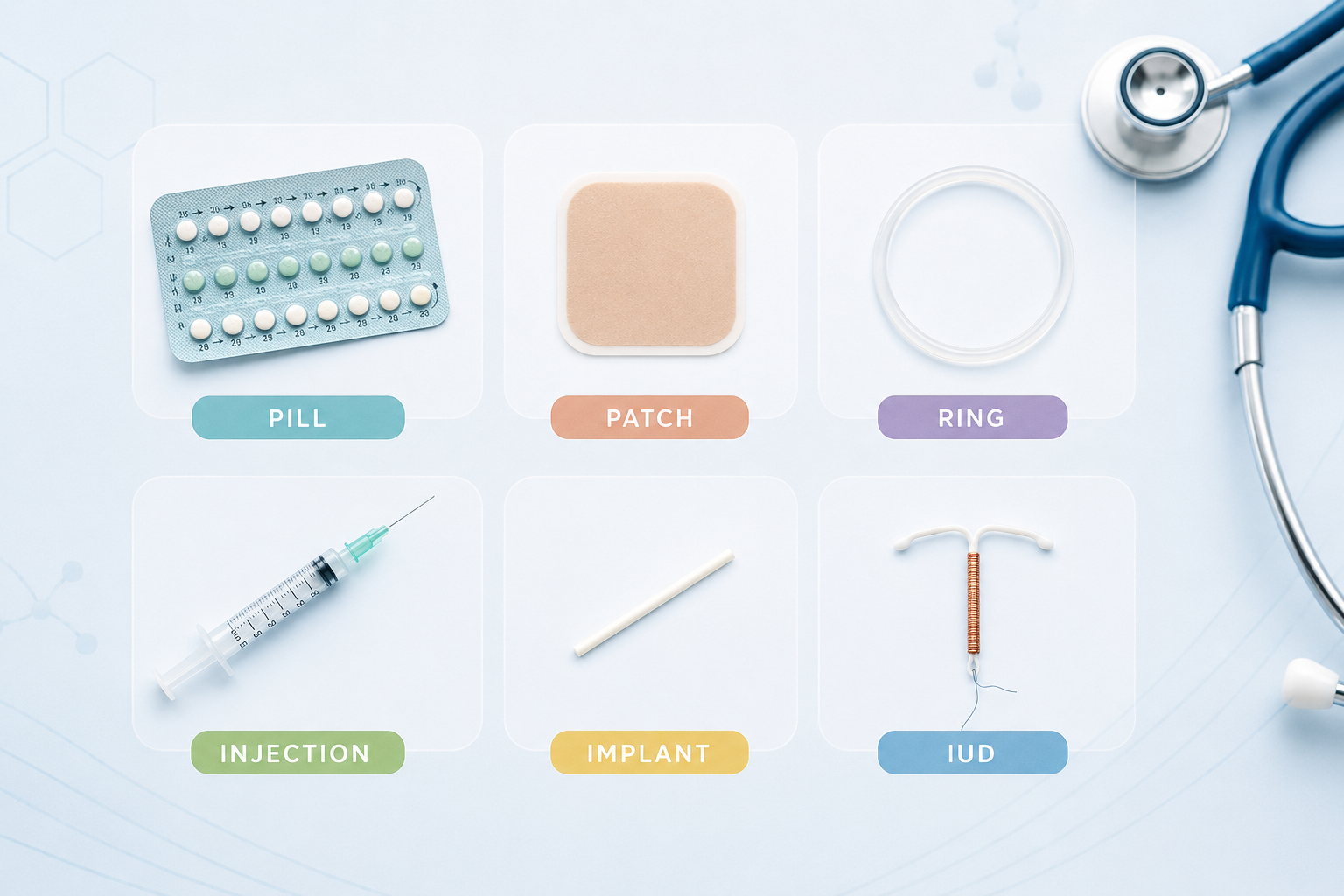
- Most primary care clinicians prescribe pills, patches, rings, and injections; fewer offer IUDs or implants due to training and equipment requirements.
- Because there are far more primary care providers than OB-GYNs, they collectively serve a larger share of contraception patients nationwide.
- Birth control can help with heavy periods, acne, endometriosis symptoms, and PMS, not just pregnancy prevention.
- Teenagers can often get birth control from a primary care doctor; confidentiality rules vary by state.
- Telehealth consultations for birth control prescriptions are widely available in 2026.
- Cost without insurance varies widely by method; generic pills can cost as little as $0–$50/month, while LARCs have higher upfront costs but lower long-term costs.
- Patients with a history of migraines with aura should avoid estrogen-containing contraceptives, this is a critical safety point your doctor will screen for.
- IDCC Health Services in Brooklyn offers primary care and gynecology under one roof, so patients can get contraceptive counseling and specialist support without leaving the network.
Can Primary Care Doctors Prescribe Birth Control? The Direct Answer
Primary care doctors can absolutely prescribe birth control. This is not a gray area. The CDC’s guidance on contraceptive services is written for “all clinicians providing contraceptive services”, not just OB-GYNs. Family medicine physicians, internal medicine doctors, pediatricians (for adolescent patients), and board-certified nurse practitioners all operate within this scope.
What varies is practice pattern, not legal authority. National survey data shows that roughly 51% of family physicians and only about 20% of internal medicine physicians routinely prescribe hormonal contraception, compared to over 73% of OB-GYNs. So if you ask your primary care doctor, the answer may depend on their training, comfort level, and clinic setup.
The practical takeaway: Call ahead and ask. If your primary care doctor doesn’t prescribe birth control, they can refer you to a gynecologist, ideally one in the same practice so your care stays coordinated.
What Types of Birth Control Can My Primary Care Doctor Prescribe?
Most primary care doctors can prescribe the full range of hormonal contraceptives. Long-acting methods like IUDs and implants are less commonly offered because they require a minor in-office procedure and specific training.
Methods typically available through primary care:
| Method | Type | Primary Care Availability |
|---|---|---|
| Combined oral contraceptive pill | Hormonal | Very common |
| Progestin-only pill (mini-pill) | Hormonal | Very common |
| Contraceptive patch | Hormonal | Common |
| Vaginal ring (NuvaRing) | Hormonal | Common |
| Depo-Provera injection | Hormonal | Common |
| Implant (Nexplanon) | LARC | Less common; requires training |
| Hormonal IUD (Mirena, Kyleena) | LARC | Less common; requires procedure |
| Copper IUD (Paragard) | Non-hormonal LARC | Less common; requires procedure |
| Condoms / barrier methods | Non-hormonal | Recommended by all providers |
| Emergency contraception | Hormonal | Available; some OTC |
Edge case to know: If your primary care doctor doesn’t insert IUDs or implants in-office, they can still counsel you on these methods and refer you to a gynecologist for the procedure. At a multi-specialty clinic like IDCC Health Services in Brooklyn, that referral happens within the same network, meaning your records, history, and care plan stay connected.
How Quickly Can I Get Birth Control from My Primary Care Physician?
In most cases, you can get a birth control prescription at your very next appointment, sometimes even the same day. For pills, patches, rings, and injections, no special equipment is needed. The visit typically involves a brief health history review, blood pressure check, and a discussion of your goals and medical background.
- Same-day prescriptions are realistic for oral contraceptives if you have no complicating health factors.
- IUDs and implants require scheduling a separate procedure appointment, which may take days to a few weeks depending on the clinic.
- Telehealth prescriptions (see below) can be issued within hours for eligible patients.
IDCC Health Services offers same-day appointments and walk-ins at all three Brooklyn locations, which means you don’t have to wait weeks to start this conversation.
Can Primary Care Doctors Do Birth Control Consultations Virtually?
Yes. Telehealth birth control consultations are widely available in 2026, and primary care doctors can prescribe pills, patches, rings, and injections through a virtual visit in most states. A video or phone appointment works well for:
- Patients who are already on a method and need a refill or switch.
- New patients with no significant health concerns who want to start oral contraceptives.
- Follow-up discussions about side effects.
What telehealth cannot do: A provider cannot insert an IUD or implant virtually. Those procedures require an in-person visit. If you’re interested in a LARC, start with a virtual consultation to discuss options, then schedule an in-person appointment for the procedure.
What Birth Control Options Work Best If I Have Heavy Periods?
If heavy periods are your primary concern, hormonal IUDs (like Mirena or Kyleena) are often the most effective option, they can reduce menstrual bleeding by up to 90% in many patients. Combined oral contraceptive pills and the hormonal patch also significantly reduce flow and cramping for most users.
Best options for heavy periods, ranked by evidence:
- Hormonal IUD, highest reduction in bleeding; lasts 3–8 years depending on brand.
- Combined oral contraceptive pill, regulates cycles, reduces flow and pain.
- Depo-Provera injection, many users stop having periods entirely after a few months.
- Hormonal patch or ring, similar benefits to the pill, different delivery method.
Your primary care doctor can prescribe options 2–4 directly. For a hormonal IUD, they may refer you to a gynecologist for insertion. At IDCC Health Services, board-certified GYN and midwifery specialist Dina Israelov is available to handle exactly this kind of coordinated care.
Are There Birth Control Methods That Help With Acne?
Yes. Certain combined oral contraceptive pills are FDA-approved specifically for acne treatment. They work by reducing androgen levels, which decreases oil production in the skin. The most commonly prescribed for acne include pills containing drospirenone, norgestimate, or norethindrone acetate combined with ethinyl estradiol.
Important nuance: Not all pills are equal for acne. Progestin-only pills (the mini-pill) and Depo-Provera can sometimes worsen acne in certain patients. Your primary care doctor should know your skin history before prescribing.
If acne is a significant concern alongside contraception, mention it explicitly at your appointment, it changes which formulation makes the most sense. You may also benefit from a combined approach with a dermatology consultation.
What Birth Control Shouldn’t I Take If I Have a History of Migraines?
This is one of the most clinically important questions in contraceptive prescribing. Patients with migraines with aura should not take estrogen-containing contraceptives, including most combined pills, the patch, and the vaginal ring. This is because estrogen increases stroke risk in this specific population, and migraines with aura are already an independent stroke risk factor.
Safe options for migraine patients:
- Progestin-only pill (mini-pill), generally considered safe.
- Hormonal IUD, safe; very low systemic hormone exposure.
- Copper IUD, completely hormone-free.
- Depo-Provera injection, generally acceptable; discuss with your doctor.
- Implant (Nexplanon), progestin-only; generally acceptable.
Migraines without aura are a different situation, combined pills may still be an option depending on other risk factors. Your primary care doctor will screen for this distinction. If you’re unsure whether your migraines include aura, understanding when to talk to a healthcare professional can help you prepare for that conversation.
Can Birth Control Help With Endometriosis Symptoms?
Birth control is one of the first-line treatments for endometriosis symptom management, though it does not cure the condition. Hormonal contraceptives reduce estrogen’s effect on endometrial tissue, which can significantly decrease pain, cramping, and heavy bleeding associated with endometriosis.
Effective options for endometriosis:
- Continuous combined pill use (skipping the placebo week), suppresses periods and reduces flares.
- Hormonal IUD, reduces local inflammation and bleeding.
- Progestin-only methods, can suppress endometrial tissue growth.
A primary care doctor can start this conversation and prescribe initial hormonal management. For complex or severe endometriosis, a gynecology referral is often appropriate for further evaluation, including imaging. IDCC’s in-house gynecology and sonography services make this kind of coordinated workup straightforward for Brooklyn patients.
Can Teenagers Get Birth Control from a Primary Care Doctor Without Parents Knowing?
In many U.S. states, minors can consent to contraceptive services without parental involvement. New York State, for example, allows minors to consent to contraception independently. This means a teenager can visit their primary care doctor or a clinic and receive a birth control prescription confidentially.
What to know:
- Confidentiality rules vary by state, always confirm with your provider.
- Insurance billing can sometimes reveal the service to a policyholder (usually a parent). Cash payment or public health programs can preserve privacy.
- Primary care doctors, including pediatricians and family medicine physicians, are trained to handle these conversations with sensitivity.
If a teenager is already established with a primary care doctor, that relationship is often the most comfortable place to start. For more on when to see a gynecologist for the first time, IDCC has additional guidance for young patients navigating these decisions.
How Much Does Birth Control Cost Without Insurance? Most Affordable Options
Without insurance, birth control costs range from nearly nothing to several hundred dollars, depending on the method.
| Method | Estimated Monthly Cost (No Insurance) | Notes |
|---|---|---|
| Generic combined pill | $0–$50/month | Many pharmacies offer $9–$20 generics |
| Patch | $30–$80/month | Brand-name costs more |
| Vaginal ring | $30–$80/month | Generic options available |
| Depo-Provera injection | $30–$75 per shot (every 3 months) | |
| Implant (Nexplanon) | $800–$1,300 upfront | Lasts up to 3 years; low per-year cost |
| Hormonal IUD | $500–$1,000 upfront | Lasts 3–8 years |
| Copper IUD | $500–$1,000 upfront | Lasts up to 10 years; no hormones |
| Emergency contraception | $10–$50 OTC |
Most affordable ongoing option: Generic oral contraceptive pills remain the lowest monthly cost for most uninsured patients. For long-term use, LARCs have a high upfront cost but a much lower cost per year.
For a broader look at how much a doctor check-up costs without insurance, including the visit cost to get your prescription, IDCC’s blog covers this in detail. IDCC Health Services accepts most major insurance plans including Medicaid, Medicare, Healthfirst, Fidelis Care, MetroPlus, and many others, which can reduce or eliminate out-of-pocket costs for contraception.
How Do I Know Which Birth Control Method Is Right for Me?
No single method is right for everyone. The best choice depends on your health history, lifestyle, reproductive goals, and tolerance for side effects. Your primary care doctor will walk through a structured assessment.
Key factors that guide the decision:
- Do you want to get pregnant in the next 1–2 years? (Short-acting methods may be preferable.)
- Do you have migraines with aura, blood clots, or high blood pressure? (Estrogen-containing methods may be contraindicated.)
- Do you want a method you don’t have to think about daily? (IUD or implant.)
- Are you managing heavy periods, acne, or endometriosis? (Certain formulations are better suited.)
- Do you prefer hormone-free contraception? (Copper IUD or barrier methods.)
Choose X if…
- You want maximum effectiveness with zero daily effort → IUD or implant.
- You want hormonal benefits (lighter periods, acne control) with flexibility → Combined pill.
- You can’t use estrogen → Progestin-only pill, hormonal IUD, or implant.
- You want no hormones at all → Copper IUD or condoms.
Understanding the benefits of having a primary care physician includes exactly this kind of ongoing, personalized guidance, a relationship where your full health picture informs every recommendation.
Do Male or Female Primary Care Doctors Differ in Prescribing Birth Control?
The short answer is no, prescribing authority for birth control is not determined by the physician’s gender. Both male and female primary care doctors are equally authorized to prescribe all forms of contraception.
In practice, some patients feel more comfortable discussing reproductive health with a female provider, which is a completely valid preference. Most clinics, including IDCC Health Services, have both male and female physicians available, and you can request a provider based on your comfort level. What matters most is that your doctor has the training and willingness to have an open, non-judgmental conversation about your contraceptive needs.
Are There Side Effects I Should Know About Before Getting Birth Control?
Yes, and your primary care doctor should review these with you before prescribing. Side effects vary significantly by method and formulation.
Common side effects by category:
- Combined pills/patch/ring: Nausea (usually improves after 1–3 months), breast tenderness, spotting between periods, mood changes, decreased libido.
- Progestin-only pill: Irregular spotting, especially in the first few months.
- Depo-Provera: Irregular bleeding or no periods, potential bone density changes with long-term use, delayed return to fertility after stopping.
- Hormonal IUD: Cramping and spotting after insertion (usually resolves in 3–6 months); lighter or absent periods.
- Copper IUD: Heavier periods and more cramping, especially in the first few months.
- Implant: Irregular bleeding is the most common complaint.
Serious but rare risks include blood clots (primarily with estrogen-containing methods), especially in smokers over 35. This is why your doctor will ask about smoking, blood pressure, and personal/family history before prescribing.
If you experience severe headaches, chest pain, vision changes, or leg pain after starting a hormonal method, contact your provider promptly. This is also a reason why having an established primary care relationship, not just a one-time telehealth visit, matters for ongoing monitoring.

Getting Birth Control at IDCC Health Services in Brooklyn
IDCC Health Services is an NCQA-certified Patient-Centered Medical Home with three Brooklyn locations. That certification means care is coordinated, evidence-based, and built around the patient, not siloed by department.
For contraceptive care specifically, this matters because:
- Primary care and gynecology are both available in-house. If your primary care doctor starts your contraceptive conversation and determines you need a gynecology consult or an IUD insertion, that referral happens within the same network. Your records follow you.
- Board-certified physicians across specialties, including Dina Israelov (GYN/Midwifery), Dr. Irina Pruchansky (Family Medicine), Dr. Stella Geller (Family Medicine), and Marina Timoshenko, FNP, are equipped to address reproductive health needs.
- Multilingual staff speak English, Russian, Ukrainian, Georgian, and Spanish, so language is not a barrier to getting accurate information about your options.
- Same-day appointments and walk-ins mean you don’t have to plan weeks ahead to start this conversation.
For patients managing related concerns, like what women’s preventive care covers or when to see a gynecologist for the first time. IDCC’s blog and clinical team provide both education and direct access to care.
Three Brooklyn locations:
- 445 Kings Hwy, 2nd Floor, Brooklyn, NY 11223 | (718) 715-0624 | Appointment: (718) 676-1710
- 2846 Stillwell Ave, Brooklyn, NY 11224 | (718) 715-0613 | Appointment: (718) 333-4111
- 201 Kings Highway, Brooklyn, NY 11223 | (718) 715-0629 | Appointment: (718) 484-7166
Most major insurance plans accepted, including Medicaid, Healthfirst, MetroPlus, Fidelis Care, and many others. See the full list at idcchealth.org/insurance.php.
FAQ: Can Primary Care Doctors Prescribe Birth Control?
Do I need to see a gynecologist to get birth control?
No. Primary care doctors can prescribe most forms of birth control, including pills, patches, rings, and injections. A gynecologist is typically needed only for IUD or implant insertion, or for more complex reproductive health concerns.
Can a family doctor prescribe the pill on the first visit?
Yes, in most cases. A first visit for birth control typically includes a health history review and blood pressure check. If there are no contraindications, a prescription can be issued the same day.
Can an internal medicine doctor prescribe birth control?
Yes, though internal medicine physicians prescribe contraception less frequently than family medicine doctors. It depends on the individual physician’s training and practice focus.
Can a nurse practitioner prescribe birth control?
Yes. Board-certified nurse practitioners (FNPs) have full prescribing authority for contraceptives in New York and most other states.
The answer to “can primary care doctors prescribe birth control” is a clear yes, and for many patients, their primary care doctor is the most accessible, convenient, and appropriate starting point for this conversation. From pills and patches to injections and referrals for LARCs, primary care providers are equipped to handle most contraceptive needs within a single visit.
What matters most is finding a provider who takes the time to understand your full health picture, your cycle concerns, your acne, your migraine history, your reproductive goals, and matches you with the right method. That’s exactly what coordinated, patient-centered primary care is designed to do.
If you’re in Brooklyn and ready to have this conversation, IDCC Health Services offers primary care, gynecology, and specialist support under one roof. Same-day appointments are available. Visit idcchealth.org/contact.php or call the location nearest you to schedule your appointment today.
Sources
- Wollum, A., Zuniga, C., Grindlay, K., & Grossman, D. (2023). Who accesses birth control online? An analysis of requests for contraception submitted to an online prescribing platform in the United States. Women’s Health Issues, 33(1), 25-35.
https://www.sciencedirect.com/science/article/abs/pii/S1049386722000846
- Cameron, N. A., Blyler, C. A., & Bello, N. A. (2023). Oral contraceptive pills and hypertension: a review of current evidence and recommendations. Hypertension, 80(5), 924-935.
https://www.ahajournals.org/doi/full/10.1161/HYPERTENSIONAHA.122.20018
Questions about your health? We're nearby.
Board-certified providers across 17 specialties — three Brooklyn locations, open Sundays at 445 Kings Highway.
- ✓ Same-week appointments
- ✓ Most major insurance accepted & verified for you
- ✓ Spanish-speaking staff available
Book a visit
We'll call you back to confirm — usually the same day.
Prefer to talk? Call 718-375-3200

When to see a primary care doctor in Sheepshead Bay: A Primary Care Guide for Brooklyn Patients
Oct 9, 2026
When to See a Primary Care Doctor in Coney Island
Oct 7, 2026
Gynecology in Brooklyn: What to Expect and How to Find the Right Gynecologist
Oct 6, 2026