Lower Back Pain Causes: What’s Behind Your Ache and How to Find Relief
By the IDCC Health editorial team
Understanding Your Lower Back: Anatomy and Pain Sources
Your lower back, or lumbar spine, has five vertebrae with discs between them acting as shock absorbers. Nerves run through the spine, and muscles and ligaments provide stability. Pain can arise from any of these structures. At IDCC Health, a specialist like Tetyana Roytman MS FNP-BC (Neurology & Pain Management) can perform a thorough evaluation to pinpoint the cause.
Most back pain comes from muscle or ligament strain due to lifting, twisting, or poor posture. Acute episodes improve within days. Other causes include herniated disc, sciatica, spinal stenosis, and osteoarthritis, which can lead to chronic pain (lasting over three months). If pain persists, see our article Back Pain Doesn’t Go Away: What You Need to Know. Physical Therapy can strengthen supporting muscles. The Pain Management service at IDCC Health offers many options. According to MedlinePlus, accurate diagnosis is key.

Common Causes of Lower Back Pain
Lower back pain can come from any structure in the spine or surrounding muscles. Acute pain often stems from a muscle strain or sprain and improves within weeks. Chronic pain lasts over 12 weeks and may indicate a deeper problem. A provider like Tetyana Roytman MS FNP-BC (Neurology & Pain Management) can help identify the cause. If your pain persists, see our article Back Pain Doesn’t Go Away: What You Need to Know. Below are the most common causes.
Some causes require more than rest and may need Physical Therapy or other treatments.
- Muscle or ligament strain: Overstretching or tearing from lifting, sudden movements, or poor posture. This is the most common cause of acute lower back pain.
- Herniated disc: The soft center of a disc pushes through the outer layer and presses on nerves, causing pain, numbness, or weakness in the leg.
- Sciatica: Nerve pain from compression of the sciatic nerve, often due to a herniated disc or bone spur. Sharp pain travels down one leg.
- Spinal stenosis: Narrowing of the spinal canal that puts pressure on nerves, more common in adults over 60, causing pain when walking or standing.
- Osteoarthritis: Breakdown of cartilage in spinal joints, leading to inflammation, stiffness, and pain. Bone spurs can form and irritate nerves.
- Less common but serious causes: Infections like osteomyelitis, kidney stones, pancreatitis, or a fracture after a fall. These require immediate medical attention.
Acute vs. Chronic Back Pain: What’s the Difference?
Lower back pain is either acute or chronic. Acute pain comes on suddenly and lasts days to weeks, often from a strain or minor injury. It usually resolves with rest and OTC pain relievers. The American Academy of Family Physicians notes that acute pain often resolves within 4-6 weeks without imaging.
Chronic back pain lasts 12 weeks or more, even after the initial cause is treated. It can develop from conditions like osteoarthritis or disc issues and may involve changes in nerve signaling. If your pain doesn't go away, get an evaluation.
Red flags like cauda equina syndrome (loss of bladder/bowel control, numbness in groin or legs, weakness) or symptoms like fever, weight loss, or history of cancer require urgent care. At IDCC, Tetyana Roytman MS FNP-BC can help differentiate acute vs chronic pain and guide treatment. For more on what pain doctors offer, see Do Pain Management Doctors Prescribe Pain Meds?
- Acute back pain: sudden onset, lasts days to weeks, often improves with self-care, rarely needs imaging.
- Chronic back pain: lasts 12 weeks or more, may be linked to ongoing conditions or nervous system changes, requires professional diagnosis.
- Red flags (seek immediate care): loss of bladder/bowel control, numbness in groin or legs, weakness in both legs, pain after fall or trauma, fever, unexplained weight loss, history of cancer.
Red Flags: When Lower Back Pain Needs Urgent Care
Most back pain is not an emergency and resolves within weeks. But some symptoms signal a serious problem. Knowing the red flags helps you decide when to call a doctor or go to the ER.
Seek urgent care if you have fever, chills, or unexplained weight loss (possible infection). Loss of bladder/bowel control or numbness in groin may be cauda equina syndrome, requiring emergency surgery. Also seek help if pain follows a fall or injury, if you have a history of cancer, or if pain is severe and worsening.
At IDCC, Tetyana Roytman MS FNP-BC (Neurology & Pain Management) helps identify red flags early. If your pain persists but is not an emergency, schedule at our Brooklyn locations: 445 Kings Highway, 2846 Stillwell Avenue (Coney Island), or 201 Kings Highway. See our articles Back Pain Doesn’t Go Away: What You Need to Know and What Do you Do When Your Doctor Ignores Your Pain? for more.
- Fever, chills, or unexplained weight loss
- Loss of bladder or bowel control
- Numbness in the groin or inner thighs
- Pain after a fall, accident, or injury
- History of cancer with new back pain
- Severe, constant pain that worsens over days or weeks
Treatment Options for Lower Back Pain
After diagnosis, treatment begins. Most acute pain improves with self-care in weeks, according to MedlinePlus. For persistent pain, IDCC offers Physical Therapy, medication, and interventional procedures through the Pain Management service. See the related article Back Pain Doesn’t Go Away: What You Need to Know.
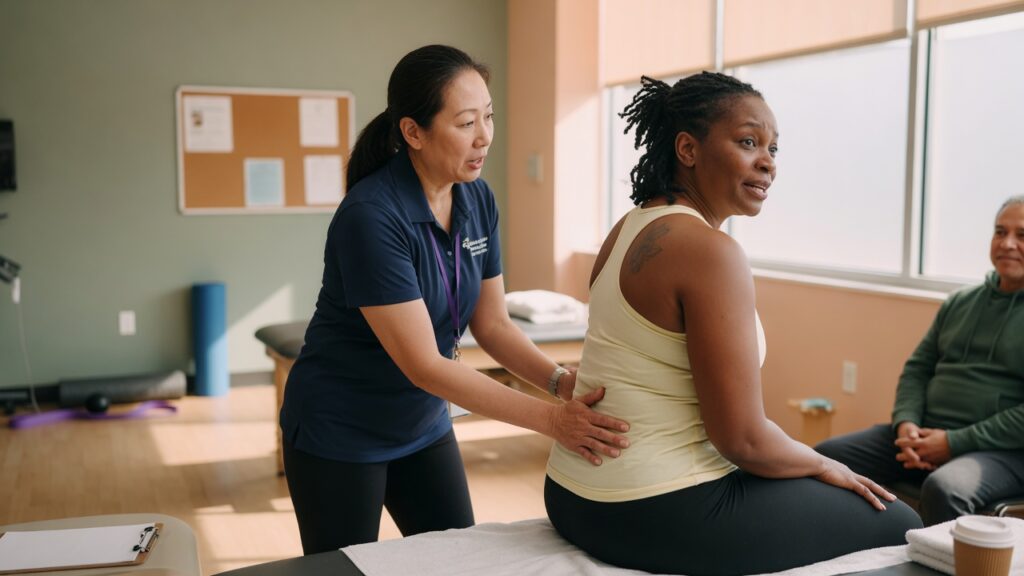
Physical Therapy strengthens supporting muscles and corrects posture. Occupational Therapy helps adapt daily tasks. Rehabilitation services combine both for a comprehensive approach.
If therapy isn't enough, interventional procedures like epidural injections or nerve blocks can provide targeted relief. Tetyana Roytman MS FNP-BC may recommend these. Medication may also be part of the plan; see Do Pain Management Doctors Prescribe Pain Meds? For severe cases, your care team may include Primary Care doctor Stella Geller DO and specialists like Psychiatry if chronic pain affects mood or sleep.
For acute injury pain, providers at our locations (445 Kings Highway or 2846 Stillwell Avenue) can create a plan with rest, movement, and NSAIDs if appropriate. MedlinePlus notes that nonsteroidal anti-inflammatory drugs are commonly used; always follow your provider's guidance.
Less common causes like kidney stones or gynecologic conditions may require referral to Gastroenterology or Gynecology. Your team will rule these out. As How Many Chances Do You Get at Pain Management? explains, finding the right treatment takes time and open communication.
- Physical Therapy: Strengthens muscles, improves flexibility, and corrects posture to prevent reinjury.
- Occupational Therapy: Helps you adapt daily activities to reduce back strain.
- Interventional procedures: Epidural injections, nerve blocks, or radiofrequency ablation for targeted relief.
- Medication: Over-the-counter or prescription pain relievers, used under medical supervision.
- Primary care coordination: Your Primary Care doctor manages overall health and connects you with other specialists like Psychiatry, Podiatry, or Cardiology as needed.
- Multidisciplinary care: A team including Tetyana Roytman MS FNP-BC, Stella Geller DO, and physical therapists works together on your plan.
Your Care Team at IDCC Health in Brooklyn
At IDCC, a team works with you. Your main provider for back pain is often Tetyana Roytman MS FNP-BC, a pain management specialist with neurology training. She sees patients at 445 Kings Highway and 2846 Stillwell Avenue (Coney Island). She evaluates your history and may order imaging or nerve tests.
Back pain can involve other conditions, so your team may include Primary Care doctor Stella Geller DO to manage overall health, and referrals to Cardiology, Gastroenterology, or Podiatry as needed. Our gynecology services can also help if pelvic issues contribute.
Rehabilitation specialists offer Physical Therapy and Occupational Therapy. If more is needed, interventional procedures or medication are available. See Do Pain Management Doctors Prescribe Pain Meds? and What Do You Do When Your Doctor Ignores Your Pain? These services are also at our 201 Kings Highway location. The goal is to return to your daily life without pain.
Frequently Asked Questions About Lower Back Pain
Many people have questions about lower back pain. At IDCC, providers like Tetyana Roytman MS FNP-BC often hear these concerns. For a full overview, visit our Pain Management page.
Common questions: What causes it? Mostly muscle strain, herniated discs, or sciatica. When to see a doctor? If pain lasts weeks or includes numbness. Red flags need urgent care. See Back Pain Doesn’t Go Away: What You Need to Know and the MedlinePlus page on Back Pain for more.
Treatments range from self-care to Physical Therapy and other options.
- What is the most common cause of lower back pain? Muscle or ligament strain from lifting, twisting, or sudden movements is the most frequent cause. It usually improves with rest and gentle activity.
- Can lower back pain be a sign of something serious? Yes, but it is rare. Serious causes include infection, fracture, or nerve compression. See a doctor if you have unexplained weight loss, fever, or pain after a fall.
- How is lower back pain treated? Treatment depends on the cause. Options include physical therapy, medications, interventional procedures, and lifestyle changes. A pain management specialist can create a plan tailored to you.
- How long does it take to recover from lower back pain? Acute pain often improves within a few days to weeks. Chronic pain lasts longer than 12 weeks and may require ongoing care. Early treatment can speed recovery.
- What can I do at home for lower back pain? Apply ice or heat, stay active with gentle stretching, and avoid heavy lifting. Over-the-counter pain relievers can help short-term. Always check with a provider before starting new treatments.
Related Articles
When to Seek Care Right Away
- Symptoms that are severe, sudden, or rapidly getting worse
- Fever along with pain or other new symptoms
- Chest pain, difficulty breathing, or fainting
- Numbness, weakness, or loss of function in an arm or leg
- Any symptom severe enough to interrupt sleep, work, or daily activities for more than a few days
Sources
Disclaimer: This article is for general educational purposes only and is not a substitute for professional medical advice, diagnosis, or treatment. Always seek the advice of your physician or another qualified health provider with any questions you may have regarding a medical condition.
Questions about your health? We're nearby.
Board-certified providers across 17 specialties — three Brooklyn locations, open Sundays at 445 Kings Highway.
- ✓ Same-week appointments
- ✓ Most major insurance accepted & verified for you
- ✓ Spanish-speaking staff available
Book a visit
We'll call you back to confirm — usually the same day.
Prefer to talk? Call 718-375-3200

Sciatica Symptoms: What They Feel Like and When to See a Doctor
Aug 11, 2026
Back Pain Relief: Effective Treatments and When to See a Doctor in Brooklyn
Jul 21, 2026
Pain Treatment in Brooklyn: A Comprehensive Guide to Managing Chronic and Acute Pain
Jul 17, 2026