Speech Therapy in Brooklyn: When to See a Speech Therapist and What to Expect
What Is Speech Therapy and Who Can Benefit?
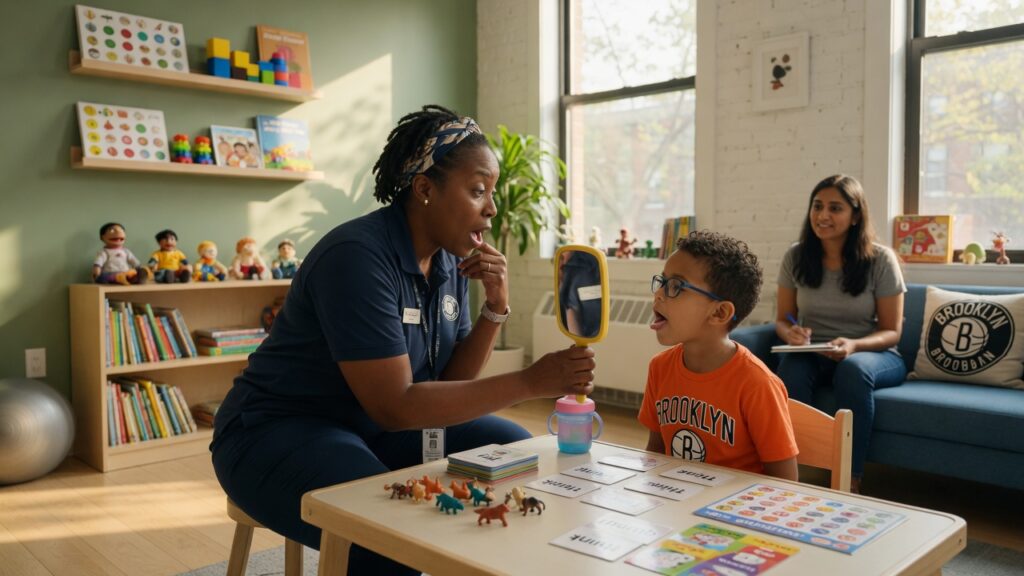
Speech therapy is a clinical service that helps people of all ages improve their ability to speak, understand language, and communicate effectively. Licensed speech-language pathologists diagnose and treat a wide range of speech and communication disorders, including articulation problems, fluency issues (stuttering), voice quality, and receptive or expressive language difficulties. According to MedlinePlus, these disorders affect people of all ages. Speech therapy is often part of a broader rehabilitation approach and works alongside Occupational Therapy and Physical Therapy to support overall recovery.
The process begins with an evaluation by a speech-language pathologist, who creates an individualized treatment plan with specific goals. For a child with a speech delay, goals might focus on new sounds or vocabulary. For an adult recovering from a stroke, therapy might target aphasia (word-finding trouble) or dysarthria (muscle weakness). Early intervention is key: the earlier a problem is identified, the better the outcomes tend to be. A primary care provider, such as Stella Geller DO, can spot early signs during a routine checkup and refer to speech therapy. That's why regular Primary Care visits matter for both children and adults. If you're unsure which doctor to see first, our article Which Doctor to Consult For Speech Delay? offers guidance. For parents, the post How to Help a 3-Year-Old Child with Speech Delays? provides practical tips for home.
Many people confuse speech therapy with special education, but they are different. Speech therapy is a healthcare service; special education is an educational support. Our article Is Speech Therapy Considered Special Education? explains the distinction. Speech concerns are often connected to other conditions. For example, if a speech problem is linked to a neurological condition, a neurologist may be involved. If anxiety or depression affects communication, psychiatry can help. IDCC Health's Brooklyn offices at 445 Kings Highway, 2846 Stillwell Avenue in Coney Island, and 201 Kings Highway make it easy to access primary and specialty care close to home.
- Children who are not meeting speech milestones (e.g., babbling by 6 months, first words by 12 months, two-word phrases by 2 years)
- Adults who have difficulty forming words, slurred speech, or loss of language after a stroke or brain injury
- Anyone with a stutter, voice disorder, or trouble understanding others
- People with neurological conditions like Down syndrome, cerebral palsy, or Parkinson's disease that affect communication
Common Signs That You or Your Child May Need Speech Therapy
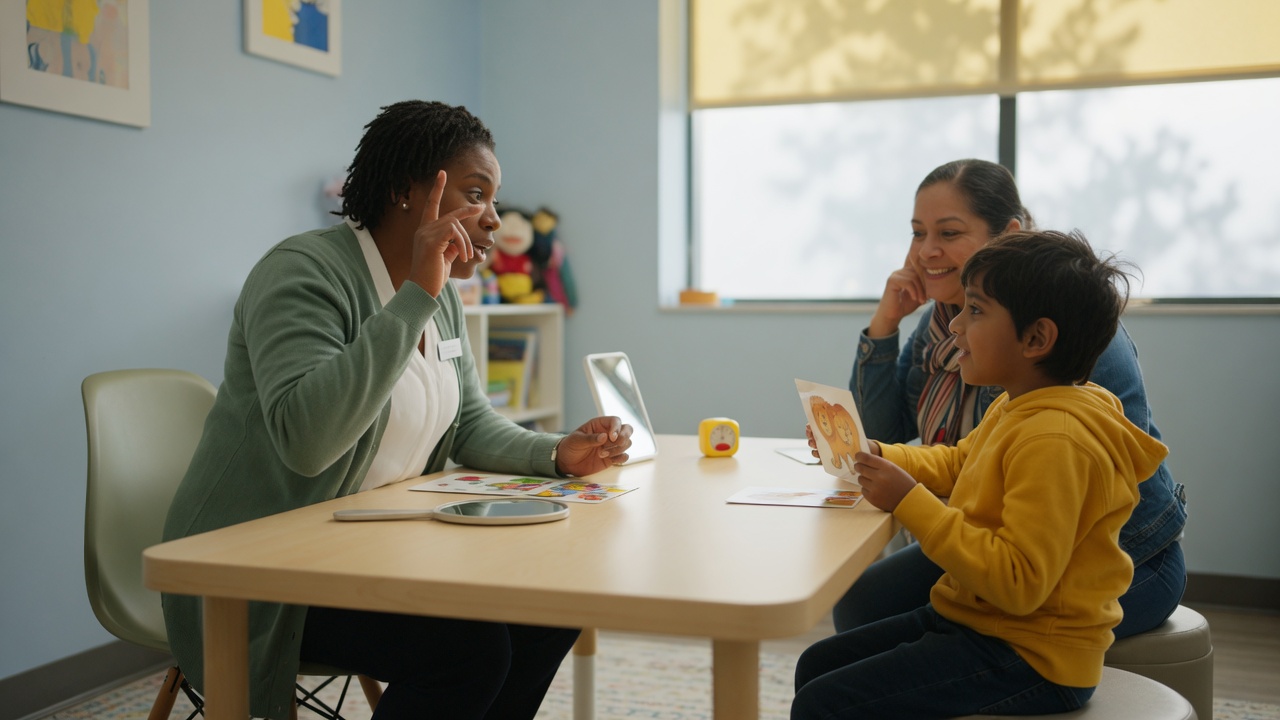
Recognizing early signs of a speech or communication problem can make a big difference. The sooner you seek help, the better the outcomes tend to be. Your primary care provider can help identify these signs and refer you to Speech Therapy for a full evaluation. Many people wonder whether their child's delays are normal or if an adult's trouble speaking after an illness needs attention. Here are common signs that it may be time to talk to a professional.
For children, watch for milestones like babbling by 6 months, first words by 12 months, and two-word phrases by 24 months. If your child is not meeting these milestones, has trouble forming words, or seems to understand less than peers, it could be a sign of a speech delay. For adults, sudden difficulty speaking, slurred speech, or trouble finding words after a stroke or injury may indicate a need for speech therapy. Other signs include a hoarse voice, stuttering that lasts beyond a few months, or trouble with social communication like taking turns in conversation. For more details on speech delays in young children, see our article on How to Help a 3-Year-Old Child with Speech Delays?.
Speech therapy often works alongside other services. For example, if the problem is caused by a neurological issue, your care team may include Neurology. If you also have trouble with daily tasks like dressing or eating, Occupational Therapy can help. And if you need to rebuild strength after an illness, Rehabilitation or Physical Therapy may be part of the plan. Your doctor may also recommend an evaluation for related conditions, such as hearing loss or developmental delays.
- Child not babbling, saying first words, or using two-word phrases by expected ages
- Difficulty forming sounds or words, or being understood by others
- Sudden loss of speech or language skills after an injury or illness (for adults)
- Stuttering or hoarse voice that lasts more than a few months
- Trouble understanding simple questions or following directions
- Social communication problems, such as not making eye contact or taking turns in conversation
What Happens During a Speech Therapy Evaluation and Treatment Plan
When you or your child starts speech therapy, the first step is a thorough evaluation. A licensed speech-language pathologist (SLP) will meet with you to understand your concerns, review medical history, and assess communication skills. For children, this often includes play-based activities to check language understanding, sound formation, and word use. For adults, the evaluation might involve tasks like naming objects, following directions, or reading aloud. The goal is to identify the specific type of speech or communication disorder, such as a speech delay, aphasia after a stroke, or a voice disorder. This process is guided by standards from trusted sources like MedlinePlus.
After the evaluation, the SLP creates an individualized treatment plan tailored to your needs. For a child with a speech delay, the plan might focus on practicing specific sounds or building vocabulary through games and repetition. For an adult recovering from a stroke, therapy could target word-finding skills or conversational strategies. Sessions are typically one-on-one and may last 30 to 60 minutes, once or twice a week. The plan includes clear, measurable goals, such as "the child will correctly produce the /s/ sound in 8 out of 10 tries" or "the adult will use a communication board to express basic needs." Progress is tracked over time, and the plan is adjusted as needed.
Your primary care provider often plays a key role in this process by identifying early signs of speech problems and referring you to speech therapy. In many cases, speech therapy works alongside other services to address the whole person. For example, a child with motor delays might also benefit from Occupational Therapy, while an adult with neurological issues may see a neurologist. If you are unsure where to start, our article Which Doctor to Consult For Speech Delay? offers helpful guidance. From there, a speech-language pathologist can begin a personalized treatment plan.
- Initial evaluation: The SLP assesses speech, language, and communication through interviews, observations, and standardized tests.
- Individualized treatment plan: Goals are set based on your specific needs, such as improving articulation, expanding vocabulary, or recovering language after an injury.
- Therapy sessions: Regular one-on-one sessions focus on practicing skills through structured activities, games, or real-life scenarios.
- Progress monitoring: The SLP tracks your improvement and adjusts the plan to keep it effective and challenging.
- Team collaboration: Your speech therapist may coordinate with your primary care doctor, neurologist, or other specialists like those in Rehabilitation or Physical Therapy to ensure comprehensive care.
How Speech Therapy Helps Children with Speech Delays and Adults After Injury
For children with speech delays, speech therapy focuses on building foundational communication skills. A speech-language pathologist (SLP) works on articulating sounds, expanding vocabulary, and improving social language use. When a child misses milestones like babbling by 12 months or first words by 18 months, a referral from a primary care provider can start the evaluation process. Therapy often uses play-based activities to keep children engaged, and parents learn strategies to practice at home. For a deeper look at supporting a toddler, see our guide on How to Help a 3-Year-Old Child with Speech Delays?.
Adults who lose speech after a stroke, traumatic brain injury, or other neurological condition also benefit greatly from speech therapy. The SLP addresses aphasia (difficulty with language), apraxia (motor planning for speech), and cognitive-communication deficits. This work is often part of a broader Rehabilitation team that may include Neurology and Occupational Therapy to address related physical and cognitive challenges. A speech-language pathologist creates a personalized plan to restore communication and improve quality of life. According to MedlinePlus, speech and communication disorders affect millions and can be treated effectively with therapy.
Accessing Speech Therapy in Brooklyn
Getting started with speech therapy is simple. Your first step is often a visit to your primary care provider, who can discuss your concerns and, if appropriate, write a referral. Speech therapy frequently works hand-in-hand with other specialties like neurology and occupational therapy to address the full picture of a patient's needs. For example, a child with a speech delay may also benefit from an occupational therapy evaluation, while an adult recovering from a stroke might see both a speech therapist and a neurologist.
Speech therapy is provided by licensed speech-language pathologists at clinics across Brooklyn. A speech-language pathologist will conduct a thorough evaluation to identify the specific communication challenges. Based on the results, they create an individualized treatment plan with clear goals. Addressing speech and communication disorders promptly can lead to better outcomes. Whether you're concerned about your child's milestones or your own speech after an injury, an evaluation is the first step toward improvement.
For more detailed guidance, explore our related articles: Which Doctor to Consult For Speech Delay? helps you understand the referral process, Is Speech Therapy Considered Special Education? clarifies common misconceptions, and How to Help a 3-Year-Old Child with Speech Delays? offers practical strategies for parents. These resources can support you or your loved one on the journey to better communication.
Frequently Asked Questions About Speech Therapy
Here are answers to common questions about speech therapy, including how it works and who can benefit. For more detailed information, you can explore our related articles on speech delay and therapy options.
- Q: What is speech therapy and who needs it? A: Speech therapy helps people of all ages improve their communication skills. It addresses speech delays, articulation problems, stuttering, voice disorders, and language issues caused by conditions like stroke, brain injury, or developmental delays. Early intervention often leads to better outcomes. According to MedlinePlus, speech and communication disorders can affect anyone.
- Q: How do I know if my child needs speech therapy? A: Common signs include not meeting speech milestones (e.g., no babbling by 12 months, no words by 18 months), difficulty forming sentences, trouble being understood by others, or loss of language skills. Our article on how to help a 3-year-old child with speech delays offers practical tips for parents. If you have concerns, a primary care provider like Stella Geller DO can evaluate your child and refer you to speech therapy.
- Q: Can adults benefit from speech therapy? A: Yes. Adults may need speech therapy after a stroke, brain injury, or surgery affecting the mouth or throat. It also helps with voice disorders, stuttering, or aphasia (trouble speaking or understanding language). Speech therapy often works alongside other services such as neurology or occupational therapy for a complete recovery plan.
- Q: How is speech therapy different from special education? A: Speech therapy is a clinical service that targets communication skills, while special education is a school-based program for children with learning needs. Many children receive both, but they are not the same. For a deeper look, read our article on whether speech therapy is considered special education.
- Q: What happens during a speech therapy evaluation? A: A speech-language pathologist (SLP) will assess your or your child's speech, language, and communication abilities through games, conversations, and standardized tests. They then create a personalized treatment plan with specific goals. The SLP may also coordinate with other specialists, such as those in rehabilitation or psychiatry, if needed.
- Q: How long does speech therapy take? A: The duration varies based on the condition, severity, and consistency of practice. Some people see progress in a few months, while others may need longer support. Your therapist will set short-term and long-term goals and adjust the plan as you improve.
- Q: How do I get started with speech therapy? A: Speech therapy usually begins with a referral from your primary care provider, who can evaluate your concerns and connect you with a licensed speech-language pathologist. Early help makes a difference.
Related Articles
- Why Is My Penis Shrinking? Causes, Prevention, and Solutions
- What is Ambulatory Referral to Cardiology?
Our Brooklyn Locations
Related Providers & Services
When to Seek Care Right Away
- Symptoms that are severe, sudden, or rapidly getting worse
- Fever along with pain or other new symptoms
- Chest pain, difficulty breathing, or fainting
- Numbness, weakness, or loss of function in an arm or leg
- Any symptom severe enough to interrupt sleep, work, or daily activities for more than a few days
Sources
Disclaimer: This article is for general educational purposes only and is not a substitute for professional medical advice, diagnosis, or treatment. Always seek the advice of your physician or another qualified health provider with any questions you may have regarding a medical condition.
Questions about your health? We're nearby.
Board-certified providers across 17 specialties — three Brooklyn locations, open Sundays at 445 Kings Highway.
- ✓ Same-week appointments
- ✓ Most major insurance accepted & verified for you
- ✓ Spanish-speaking staff available
Book a visit
We'll call you back to confirm — usually the same day.
Prefer to talk? Call 718-375-3200