When to See a Rheumatologist in Coney Island: Warning Signs of Joint and Immune Conditions

By the IDCC Health editorial team
What Is a Rheumatologist and How Is It Different from Primary Care?
A rheumatologist is a doctor who treats conditions that affect the joints, muscles, bones, and immune system. The immune system is the body's defense network. It normally fights germs, but in some illnesses it becomes overactive and attacks healthy tissue. Rheumatologists focus on arthritis, a word for joint inflammation (swelling and irritation inside a joint). According to MedlinePlus, a health information service from the National Library of Medicine, arthritis includes more than 100 different conditions. The Centers for Disease Control and Prevention (CDC) also reports that arthritis is a common cause of disability in adults.
A primary care doctor is usually the first person people see for most health concerns. Primary care includes family medicine and internal medicine. These doctors look at the whole person, manage ongoing conditions, offer preventive care, and decide when a patient needs a specialist. Stella Geller DO, who practices Family Medicine, is one example of how this kind of care works on a team. Many people find it helpful to keep a regular primary care doctor, as explained in our article on the Benefits of Having a Primary Care Physician for Better Health and Care. A primary care doctor can often start the work-up for joint symptoms and then refer you to a rheumatologist if needed.
Rheumatology is a specialty. After medical school, a rheumatologist completes extra years of advanced training focused on joint and immune conditions. That focus helps them recognize patterns that can be hard to spot in a general visit. Dr. Irine Corst MD is a rheumatologist on our team who works with primary care doctors to coordinate care. In short, primary care looks at your health as a whole, while a rheumatologist looks more closely at the joints and immune system. Both roles matter, and the two often work together.

Warning Signs That Often Lead to a Rheumatology Visit
Most joint aches have ordinary causes, such as an old injury or wear and tear over time. Some patterns, however, suggest that the joints or the immune system may need a closer look. A primary care doctor often handles the first check-up and can refer you to a rheumatologist when symptoms point that way. You can learn more about the role of primary care in our guide to the benefits of having a primary care physician.
These are general signs that often lead people to ask about rheumatology. They are not a diagnosis:
Joint pain or swelling that lasts for several weeks or keeps coming back
Morning stiffness that lasts a long time after waking
Joints that feel warm, look red, or are tender to the touch
Pain or swelling that affects the same joints on both sides of the body, such as both wrists or both knees
Deep tiredness (fatigue) that comes with fever, a rash, or unexplained weight loss
Any new or worsening symptom should be checked by a doctor. Only an exam and tests can show what is causing it. During a visit with Dr. Irine Corst MD, Rheumatology, the care team looks at your full history and checks your joints, then decides on next steps. Rheumatoid arthritis, a common inflammatory form of arthritis, often affects the small joints of the hands and feet, so these areas are a frequent focus of the first visit. Our article on how a rheumatologist diagnoses and treats rheumatoid arthritis in Brooklyn explains what typically happens after the first visit.
- Joint pain or swelling that lasts for several weeks or keeps coming back
- Morning stiffness that lasts a long time after waking
- Joints that feel warm, look red, or are tender to the touch
- Pain or swelling that affects the same joints on both sides of the body, such as both wrists or both knees
- Deep tiredness (fatigue) that comes with fever, a rash, or unexplained weight loss
Joint Problems and Other Body Systems: When Related Care Helps
Joint problems do not always stay in the joints. In some immune conditions, the immune system sends inflammation, which means swelling and irritation, to places beyond the joints. According to MedlinePlus, rheumatoid arthritis can sometimes affect the eyes, skin, lungs, and blood vessels. Because of this, a rheumatologist looks at the whole body, not only the sore joint. Some people with immune-related conditions also notice stomach or bowel changes. For those concerns, a team may include specialists in Cardiology or Gastroenterology, depending on the symptoms.
Not every ache points to an immune problem. Back pain that does not go away is common, and it can come from many sources, including the spine and muscles. Our guide to back pain that does not improve explains why these symptoms deserve attention. Some patients explore Pain Management or Physical Therapy for comfort and help with movement while the cause is being sorted out. Nerve-related signs, such as tingling, numbness, burning, or weakness in the arms or legs, may need an evaluation by a Neurology specialist. The nerves carry signals between the brain and the rest of the body, so these symptoms can have many causes. A doctor can help sort out which system is involved.
Good care often means several doctors working together. A rheumatologist, such as Dr. Irine Corst MD, focuses on joint and immune conditions. Your primary care doctor, such as Stella Geller DO in Family Medicine, can track your overall health, order first tests, and share updates with the rest of your care team. Many people find this teamwork makes their visits easier to follow. If you are unsure where to start, your primary care doctor is a good first call.
- Joints: pain, swelling, warmth, or stiffness that keeps returning
- Eyes: redness, dryness, or pain that does not go away
- Skin: rashes, sores, or changes in color
- Lungs or heart: shortness of breath or chest discomfort (these need urgent care)
- Digestive system: ongoing stomach pain, diarrhea, or weight loss
- Nerves: numbness, tingling, or weakness in the arms or legs
What to Expect at a Rheumatology Visit
A first visit with a rheumatologist usually starts with a long talk. The doctor will ask when your symptoms began, which joints hurt, whether stiffness is worst in the morning or after rest, and whether you have had fever, rash, dry eyes, or unusual tiredness. Doctors call this the medical history. Bring notes on your symptoms, including how often they happen and what seems to make them better or worse. Clear details help the doctor see patterns over time, and many joint and immune conditions show up through these patterns. At your visit with Dr. Irine Corst MD, Rheumatology, expect questions about your daily life too, such as how well you sleep and how hard it is to climb stairs or grip a cup.
Next comes a physical exam. The doctor checks your joints for swelling, warmth, tenderness, and how far you can move them. The exam may also look at your skin, eyes, lymph nodes (small glands that help fight infection), heart, and lungs, since immune conditions can affect more than the joints. This step shows whether inflammation, the body's swelling and heat response, is in one joint or many, and whether the pattern is the same on both sides of the body. Some lab tests are common. Blood tests may check for inflammation markers, such as the erythrocyte sedimentation rate (a measure of how fast red blood cells settle, which can rise with inflammation) and C-reactive protein (a substance the liver makes during inflammation). Other blood tests look for autoantibodies, which are proteins the immune system can make by mistake. No single result settles the question, so the doctor reads the results alongside your symptoms and exam. X-rays or ultrasound images are sometimes ordered as well. Our guide to how a rheumatologist diagnoses and treats rheumatoid arthritis in Brooklyn explains these steps in more detail.
Rheumatology care often works as a team. Your primary care doctor, such as Stella Geller DO, Family Medicine, can share your records, help track other health concerns, and stay in touch with the rheumatology team. If pain or limited movement is a main concern, the plan may also include Physical Therapy or Pain Management. Before you leave, the doctor should explain what tests are planned, what to watch for, and when to come back. Writing your questions down before the visit helps you remember what matters most to you. Ask what each test is for, what the results could mean, and what steps come next. Good questions lead to a clearer plan and a better understanding of your health.
How Referrals Work in Brooklyn
Many people wonder whether they need a referral before they can see a rheumatologist. A referral is a written request from another doctor, usually a primary care doctor, that sends your care to a specialist. Whether you need one depends on your insurance plan. Some plans, such as certain HMO plans, may require a referral. Other plans let you book a specialist directly. Call your insurer or the office before your visit to find out which rules apply to you.
A primary care doctor can also help if you are not sure where your symptoms fit. Primary care doctors often handle everyday health needs and can review your joint pain, stiffness, or fatigue first. If they think a rheumatologist should take a closer look, they can send a referral along with your records. If you do not have a primary care doctor yet, Stella Geller DO, Family Medicine, is one option to consider. Our Primary Care service can also help you choose a doctor who fits your needs.
Here is a simple way the process often works for patients who book through our Rheumatologist in Coney Island landing page:
- Check your insurance card and ask whether your plan needs a referral for a rheumatology visit.
- Ask your primary care doctor to send the referral, along with recent lab results, imaging, and notes about your symptoms.
- Call the office that is closest to you. Our Coney Island office is at 2846 Stillwell Avenue, and our Kings Highway offices are at 445 Kings Highway and 201 Kings Highway.
- Before your first visit, confirm that the referral is on file so the visit is not delayed.
- At your visit, Dr. Irine Corst MD, Rheumatology, can review your history and decide whether more testing or care from another team member is needed.
What to Bring and When to Seek Urgent Care
A little preparation can make your first visit more useful. Rheumatologists rely heavily on what you tell them, so clear notes help. Dr. Irine Corst MD and the rest of our team will want to know what you have noticed, how long it has been going on, and what you have already tried. Bring the following items if you can.
Some symptoms need emergency care rather than a routine appointment. Call 911 or go to the nearest emergency room right away if you have sudden, severe joint pain with fever, chest pain, shortness of breath, or trouble breathing. Seek emergency care as well for a joint that is suddenly very hot, swollen, and impossible to move, or for confusion, fainting, or new weakness on one side of the body. These signs can point to infection, heart problems, or other conditions that need prompt treatment. Our Cardiology team can help with heart concerns after the emergency is handled. If you are unsure how serious a symptom is, get help right away.
For non-emergency joint symptoms, your first step is often a visit with your Primary Care doctor. A primary care provider can review your symptoms, order basic tests, and make a referral to a rheumatologist if needed. They can also coordinate follow-up care. You can book a visit at our 2846 Stillwell Avenue office, or at 445 Kings Highway or 201 Kings Highway. When you call, mention whether you have a referral and which symptoms bother you most.
- A written symptom log: which joints hurt or swell, when symptoms start, how long morning stiffness lasts, and what seems to help or worsen them.
- A full list of all medicines, vitamins, and supplements you take, including the name of each one and how you take it.
- Family history of arthritis or other immune conditions, if you know it.
- Past test results, X-ray reports, and imaging scans, including any from your Primary Care doctor.
- Names and phone numbers of your other doctors, so your records can be shared with the rheumatology team.
Frequently Asked Questions
Do I need a rheumatologist, or can my primary care doctor check my joints first? Many people start with a primary care doctor, a general doctor who looks after your overall health. Stella Geller DO, a family medicine doctor, can do a first exam, order basic blood tests, and decide whether a referral to Rheumatology makes sense. For more on why a primary care doctor is a good starting point, see our guide to the benefits of having a primary care physician.
Is all joint pain a sign of arthritis? No. Joint pain can come from an injury, overuse, or other causes. Arthritis means swelling and irritation in one or more joints, and it is one of the most common reasons people see a rheumatologist. MedlinePlus, an online health resource from the U.S. National Library of Medicine, explains the many types of arthritis and how they are described.
How long should symptoms last before I book a visit? There is no single rule. Joint pain, stiffness, or swelling that lasts several weeks, keeps coming back, or gets worse is a good reason to book a visit. You do not need to wait until symptoms become severe before asking for help.
Can a rheumatologist help with back pain or fatigue? Rheumatologists focus on joints, muscles, and the immune system, which is the body's defense system against germs and other threats. Back pain that does not go away can have many causes, so our article on back pain that does not go away is a useful read. Some people also work with Physical Therapy to improve movement. Fatigue, or deep tiredness, is also common and has many causes. Tiredness that comes with joint symptoms, fever, or a rash is a good reason to ask a doctor about rheumatology. Dr. Irine Corst MD can review your symptoms and work with other members of the care team.
Where can I book a visit in Brooklyn? Readers nearby can start with our rheumatology page for this area. You can also visit our Kings Highway offices at 445 Kings Highway or 201 Kings Highway, or our office at 2846 Stillwell Avenue. A referral from a primary care doctor can be helpful, so ask your provider how referrals work with your health plan.
When is a symptom an emergency? Call 911 or go to the nearest emergency room right away for sudden, severe joint pain with fever, chest pain, or trouble breathing. These signs need urgent care, not a routine appointment.
Related Articles
- How a Rheumatologist Diagnoses and Treats Rheumatoid Arthritis in Brooklyn
- Why Is My Penis Shrinking? Causes, Prevention, and Solutions
- What is Ambulatory Referral to Cardiology?
- Back Pain Doesn’t Go Away: What You Need to Know
- Benefits of Having a Primary Care Physician for Better Health and Care
Related Providers & Services
When to Seek Care Right Away
- Symptoms that are severe, sudden, or rapidly getting worse
- Fever along with pain or other new symptoms
- Chest pain, difficulty breathing, or fainting
- Numbness, weakness, or loss of function in an arm or leg
- Any symptom severe enough to interrupt sleep, work, or daily activities for more than a few days
Sources
Disclaimer: This article is for general educational purposes only and is not a substitute for professional medical advice, diagnosis, or treatment. Always seek the advice of your physician or another qualified health provider with any questions you may have regarding a medical condition.
Questions about your health? We're nearby.
Board-certified providers across 17 specialties — three Brooklyn locations, open Sundays at 445 Kings Highway.
- ✓ Same-week appointments
- ✓ Most major insurance accepted & verified for you
- ✓ Spanish-speaking staff available
Book a visit
We'll call you back to confirm — usually the same day.
Prefer to talk? Call 718-375-3200
When to See a Rheumatologist in Bensonhurst: Signs, Symptoms, and What to Expect
Nov 10, 2026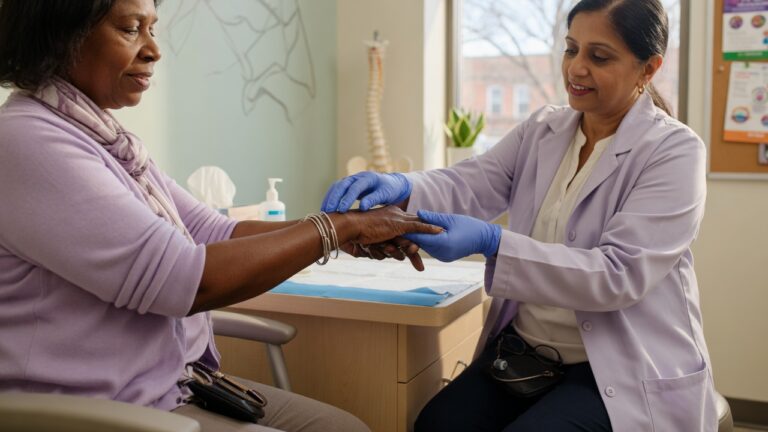
How a Rheumatologist Diagnoses and Treats Rheumatoid Arthritis in Brooklyn
Jul 14, 2026
Why Does It Feel Like Im Being Stabbed In The Stomach
May 14, 2026