Why Is Hand Hygiene Important in Healthcare Settings
In healthcare, the smallest actions often carry the biggest consequences—but one habit is frequently underestimated. why is hand hygiene important in healthcare, and what really happens when it’s overlooked? Behind every patient interaction lies a hidden chain of cause and effect that can influence safety, recovery, and trust. Understanding why is hand hygiene important in healthcare settings reveals more than you might expect.
TL;DR
Hand hygiene is a simple yet critical practice in healthcare that significantly reduces the spread of infections. Germs are mainly transmitted through hands, contaminated surfaces, droplets, and medical procedures. Proper handwashing techniques, correct timing—especially the five key moments for healthcare workers—and the use of appropriate tools like soap, alcohol-based gels, and disposable towels help protect patients, staff, and the healthcare environment from preventable infections.
Book a visit with IDCC Health Services in Brooklyn today
How does Hand Hygiene Prevent Infections in Healthcare?
Throughout the day, hands come into direct contact with many objects and surfaces, making them a frequent vehicle for germ transmission. While many microorganisms are harmless, others can cause illness. In healthcare settings, this constant contact increases the risk of infection spread if hand hygiene is not properly maintained.
Handwashing is a simple and effective way to prevent the spread of microbes and protect health. When done correctly, it helps reduce the spread of both mild and serious illnesses. In hospitals and healthcare centers, proper hand hygiene can prevent a significant portion of healthcare-associated infections, demonstrating its direct impact on patient and staff safety.
Making hand hygiene a daily routine is one of the best ways to protect personal health and that of others. This habit reduces the transmission of infections in medical spaces and in everyday life by limiting the spread of microorganisms picked up by touching potentially contaminated surfaces, people, or objects.
How Germs Spread in Healthcare Environments
Germs in healthcare environments are primarily spread through human contact and the surroundings of patients and healthcare staff. Healthcare workers’ hands, contaminated surfaces, and respiratory droplets act as major vehicles for transmission.
Germs can spread in various ways within healthcare spaces. Each mechanism contributes to infection risk when appropriate preventive measures are not applied.
- Hygiene of Hands: Direct contact is the main route of transmission. Healthcare workers’ hands can transfer pathogens from one patient to another or from contaminated surfaces.
- Contaminated Surfaces (Fomites): Bacteria can survive on handrails, medical equipment, toilets, and damp surfaces for weeks or even months. Cross-contamination occurs when these surfaces are touched, and bacteria are transferred to mucous membranes.
- Airborne Transmission and Droplets: Coughing or sneezing releases particles that can be inhaled by nearby people or settle in the environment.
- Invasive Procedures: Devices like catheters, breathing equipment, and other medical instruments can introduce germs directly into the patient’s body.
Understanding how germs spread in healthcare environments emphasizes the importance of basic preventive measures, especially hand hygiene, as the central strategy to reduce infection risk.
Role of Handwashing in Stopping Infection
Everyday contact, such as shaking hands with family members or touching common surfaces, makes it easy for microorganisms to transfer from one person to another without being visible. Keeping hands clean interrupts this chain of transmission and reduces the risk of infections, even in contexts where respiratory illnesses and other infectious conditions persist.
Moments for Handwashing
- Before eating or preparing food
- After using the bathroom
- After changing diapers
- After coughing, sneezing, or blowing your nose
- After touching animals or pets
- After returning from public places or touching common surfaces
When water and soap are not available, using alcohol-based hand sanitizer is an effective alternative to reduce the germ load and support infection prevention.
Techniques for Effective Hand Hygiene
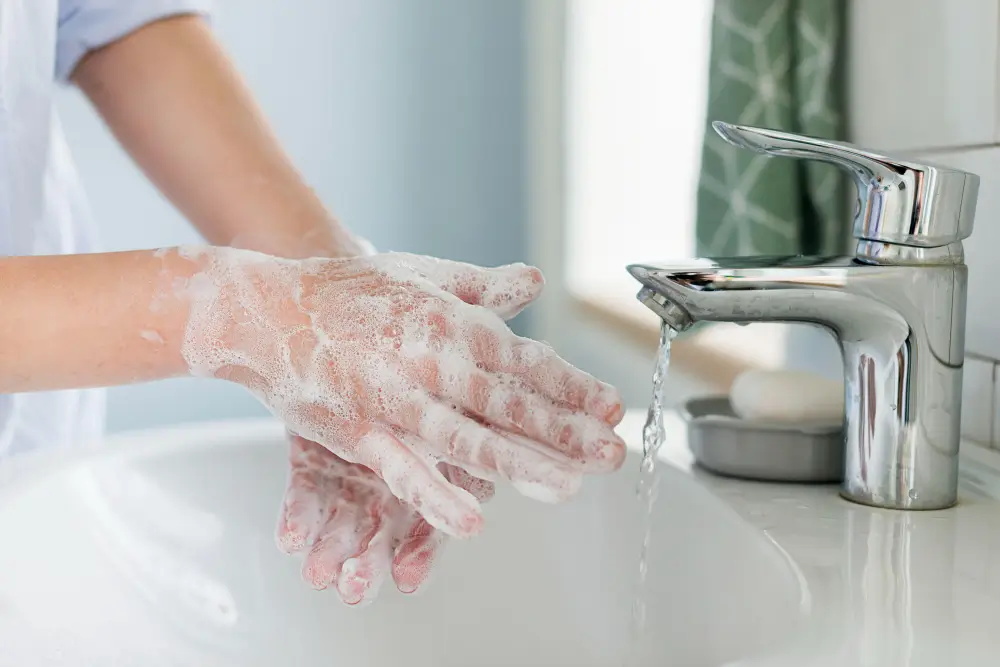
Before starting effective hand hygiene, it’s important to remove any accessories like watches, bracelets, and rings. These objects can prevent proper skin cleaning. Once removed, hands should be moistened with clean running water, and a sufficient amount of soap should be applied to cover the entire surface of the hands, ensuring the process is thorough and uniform.
The correct handwashing technique involves scrubbing all areas for at least 20 to 30 seconds. This process helps remove germs on the skin and reduces the risk of transmission.
Steps for Handwashing with Soap and Water:
- Wet hands with water.
- Apply enough soap to cover all surfaces.
- Rub the palms of your hands together.
- Rub the right palm against the back of the left hand, intertwining fingers, and vice versa.
- Rub the palms together with intertwined fingers.
- Rub the back of the fingers of one hand against the palm of the opposite hand.
- Rub the thumbs with rotating movements, trapping them with the opposite palm.
- Rub the fingertips and nails against the opposite palm in circular movements.
- Rinse hands thoroughly with plenty of water.
- Dry hands with a disposable paper towel.
- Use the same towel to turn off the tap and prevent recontamination.
When there is no visible dirt on the hands and no water and soap are available, using a gel-based hand sanitizer with more than 60% alcohol is a valid alternative. This method also requires rubbing all hand surfaces, including palms, backs, fingers, thumbs, and nails, until the product dries completely. It should not be used if the hands are visibly dirty.
Applying these techniques correctly ensures effective hand hygiene and reduces the likelihood of germ transmission in healthcare environments.
When Healthcare Workers Should Clean Their Hands
Hand hygiene in healthcare workers depends on both technique and timing. Cleaning hands at the right times is essential to prevent healthcare-associated infections and avoid the transmission of germs between patients, staff, and the clinical environment. Clear criteria are followed to guide when this practice must be performed.
Healthcare workers must follow the 5 key moments of hand hygiene, established to reduce infection risk in medical care:
- Before touching the patient: To protect the patient from germs on the worker’s hands.
- Before performing a clean or aseptic task: To avoid introducing harmful microorganisms into the patient’s body.
- After risk of exposure to body fluids: Immediately after a task involving contact with bodily fluids, even if gloves have been worn.
- After touching the patient: To protect both the worker and the healthcare environment from the patient’s germs.
- After contact with the patient’s surroundings: After touching surfaces, furniture, linens, or equipment, even without direct contact with the patient.
In addition to these key moments, hand hygiene is also mandatory in other situations:
- After removing gloves, regardless of their use.
- When hands are visibly dirty or stained.
- Between patients, before and after each interaction.
Strict adherence to these hand hygiene moments and methods significantly reduces healthcare-associated infections, protecting both patients and healthcare workers in medical settings.
Tools and Products That Aid Hand Hygiene
Effective hand hygiene relies on the combined use of soap, running water, and alcohol-based gels with the proper alcohol concentration. These products help reduce the microbial load and eliminate both visible dirt and pathogens, facilitating quick and constant cleaning in healthcare settings and daily life. Their availability supports the implementation of this practice as a basic preventive measure.
The use of complementary tools enhances the effectiveness of hand hygiene by making it more accessible and secure. Automatic dispensers, disposable paper towels, and nail brushes help prevent cross-contamination and allow for more complete cleaning, even in hard-to-reach areas like the subungual region. These solutions also reduce direct contact with potentially contaminated surfaces.
Maintaining hand hygiene as a constant habit requires suitable products and skin care. Using moisturizers helps preserve the skin’s barrier, especially after frequent washing. Applying the correct technique for the recommended time and choosing the appropriate method based on visible dirt ensures that these tools perform their preventive function and strengthen health protection.
Key Takeaways
- Hand hygiene is critical for patient and staff safety: Simple hand hygiene practices play a major role in reducing infections in healthcare settings. Small actions can have large impacts on safety, recovery, and trust.
- Hands are the primary route for germ transmission: Germs spread mainly through hands, contaminated surfaces, droplets, and medical procedures. Without proper hygiene, everyday contact increases infection risk.
- Proper handwashing effectively prevents infections: Correct technique and regular practice significantly reduce the spread of mild and severe illnesses. Making hand hygiene a routine protects both healthcare environments and daily life.
- Timing matters, especially for healthcare workers: Following the five key moments for hand hygiene helps prevent healthcare-associated infections. Cleaning hands at the right times protects patients, staff, and clinical surroundings.
- Tools and products support consistent hand hygiene: Soap, water, alcohol-based gels, and disposable tools make hygiene accessible and effective. Using the right method based on hand condition ensures better infection prevention.
FAQs
Why is hand hygiene important in health care?
Hand hygiene is essential because it prevents the spread of germs, including those resistant to antibiotics. Proper hand cleaning reduces healthcare-associated infections and protects both patients and healthcare personnel.
Why is it necessary for healthcare workers to wash their hands?
Healthcare workers’ hands are a main route for germ transmission between patients and surfaces. Washing hands lowers the risk of spreading infections and protects workers from colonization or illness.
How does hand hygiene affect your health?
Hand hygiene helps prevent illnesses by removing germs before they enter the body through the eyes, nose, or mouth. This simple action reduces infections and supports overall health.
How does hand hygiene impact patient safety?
Correct hand hygiene reduces microorganisms on hands and limits the spread of harmful germs to patients. This directly improves patient safety and lowers the risk of healthcare-associated infections.
Sources
- Smetanin, V. N. (2023). Importance of Hand Hygiene in Healthcare Settings for HAIs Prevention. Scientific Achievements of the Third Millennium.
https://doicode.ru/doifile/satm/21/satm-08-2023-05.pdf
- ALMUTAIRI, F. M., Alharbi, N. S., ALHARBI, A. M., AL-GHAMDI, J. J. A., AL GHAMDI, A. M. S., AL-ULAYAN, Y. A., … & ALMANSOUR, H. S. M. (2024). The Role of Hand Hygiene in Infection Control in Healthcare Settings. Journal of International Crisis and Risk Communication Research, 7(S11), 3025.