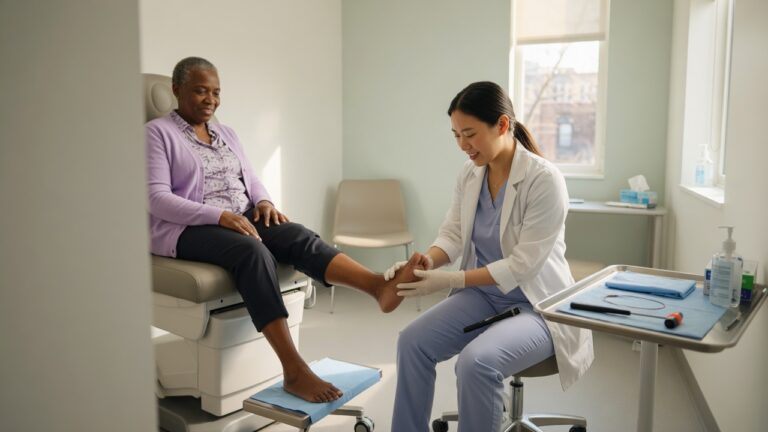
Bunions: Causes, Symptoms, and Treatment Options in Brooklyn
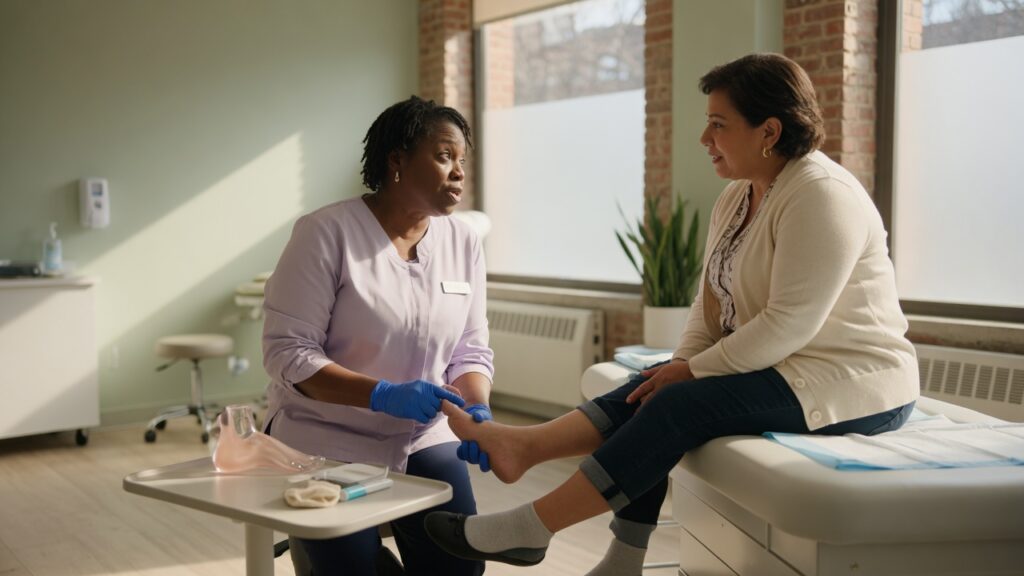
By the IDCC Health editorial team
What Is a Bunion?
A bunion is a bony bump that forms at the base of the big toe. The medical name is hallux valgus, which means the big toe shifts toward the second toe. The joint slowly pushes outward, creating the bump. According to MedlinePlus's Foot Injuries and Disorders page, foot problems like bunions can arise from a mix of pressure, footwear, and inherited tendencies. Tight-fitting shoes, repeated foot stress, and family history all play a role. This is why bunions are common in adults who spend a lot of time on their feet.
The early signs are often easy to miss. You may notice redness or slight swelling around the base of the big toe. As the bunion grows larger, pain can appear on the bottom of the foot, behind the joint, or while walking. Some people describe a burning or aching feeling that makes it hard to find comfortable shoes. A bunion can also create other foot problems. Its position can press the second toe upward, causing a hammertoe. Corns and calluses can also develop against the bump.
A podiatrist is a doctor who specializes in diagnosing and treating foot conditions. At IDCC, our Podiatry team includes Mino Abdelmessih DPM, Aleksandr Plotkin DPM, and Merabi Zonenashvili DPM. They can examine your foot, review your activity and footwear, and recommend a treatment plan. If you're wondering whether podiatrists are real doctors, see our guide 'Is a Doctor of Podiatry a Real Doctor?'. You can visit IDCC at 445 Kings Highway or 2846 Stillwell Avenue (Coney Island) to get started.

Common Symptoms and Related Foot Problems
The most common symptoms of a bunion include a visible bump on the side of the big toe, pain or soreness around the joint (especially when walking), swelling, redness, or warmth, and difficulty fitting into shoes. Some people also feel a burning sensation or numbness. If you have these signs, it's important to see a podiatrist early. According to MedlinePlus, foot injuries and disorders can limit daily activities.
Bunions can also lead to other foot problems. The pressure from the shifted toe can cause corns, calluses, and hammertoes. For practical tips on managing corns, see our guide 'How to Remove Corns on Feet Naturally at Home'. In addition, supportive therapies can help. Physical Therapy can strengthen the muscles around the foot, while Pain Management techniques can reduce inflammation. At IDCC, our Podiatry services are available to help you find relief.
- A visible bump on the side of the big toe
- Pain or soreness around the joint, especially when walking
- Swelling, redness, or warmth at the base of the big toe
- Difficulty fitting into shoes
- Corns or calluses where the toes rub together
Non-Surgical Treatment Options
Most bunions can be managed without surgery. Early treatment reduces pain and slows the progression of the deformity. Non-surgical options include changing footwear, using padding, wearing orthotics, applying ice, and taking over-the-counter pain relievers. According to MedlinePlus, many foot injuries and disorders respond well to conservative care.
Start by choosing shoes with a wide toe box and low heels, and avoid tight, pointed styles. Padding and splints cushion the joint and reduce friction. Custom orthotics from a podiatrist can help correct foot mechanics. Ice packs reduce swelling, and medications like ibuprofen ease pain. Physical Therapy can strengthen the muscles around the joint, and Pain Management services offer additional strategies if discomfort continues. A podiatrist such as Aleksandr Plotkin DPM can assess your feet and recommend the best combination.
Early evaluation is key. If you notice a bump forming, see a podiatrist promptly. At IDCC, our podiatrists provide personalized care, and you can visit our office at 445 Kings Highway for an assessment. If non-surgical treatments do not provide enough relief, surgery may be considered, but that is a later step. For now, focus on reducing pressure and inflammation.
When Surgery Might Be Needed
Surgery is usually a last resort for bunions. Most people find relief with shoe changes, padding, and other non-surgical steps. But if pain continues and limits your daily life, your podiatrist may discuss surgery. At IDCC, podiatrists like Mino Abdelmessih DPM and Aleksandr Plotkin DPM can assess your bunion and help you decide if surgery is right for you.
Bunion surgery realigns the bones in your big toe and removes the bump. Recovery takes time and varies by individual. During recovery, Physical Therapy and Pain Management can help you regain strength and control discomfort. Your podiatrist will give you specific instructions.
Surgery is not for everyone. Your doctor will consider your overall health, the severity of the bunion, and how much it affects your activities. If you have other health conditions, your Primary Care doctor may need to be involved. Early evaluation is important, so you can explore all your options before deciding.
- Pain that does not improve with non-surgical care
- A large bump that makes it hard to wear shoes
- Difficulty walking or doing daily tasks
- Stiffness or deformity that gets worse over time
Finding Podiatry Care in Brooklyn
If you're dealing with bunion pain, seeing a podiatrist early can make a big difference. At IDCC, podiatrists like Mino Abdelmessih DPM and Aleksandr Plotkin DPM specialize in foot conditions. They can assess your bunion, discuss your symptoms, and recommend a treatment plan tailored to your needs. They can also help you understand when surgery might be necessary.
IDCC offers podiatry services at several Brooklyn locations, including 445 Kings Highway and 201 Kings Highway. If you're wondering about costs, our guide on podiatry insurance coverage can help you prepare. And if you're not sure what to call your foot doctor, our article 'What is The Name of The Foot Doctor?' is a useful resource. Taking that first step toward relief is easier than you think.
Your Care Team at IDCC
At IDCC, your bunion care is supported by a team of specialists. In addition to our podiatrists Mino Abdelmessih DPM, Aleksandr Plotkin DPM, and Merabi Zonenashvili DPM, you may benefit from Primary Care for overall health, Physical Therapy for strengthening, and Pain Management for persistent discomfort. If nerve-related symptoms arise, our Neurology team can help evaluate them. Rehabilitation services can also support your recovery. We also offer services like Cardiology, Gynecology, and Gastroenterology under one roof, so you can coordinate multiple health needs at a single visit. Our goal is to treat not just the bunion, but the whole person.
Frequently Asked Questions
Bunions are a common foot problem, and many people ask about causes and relief. Here are answers to frequently asked questions from our Brooklyn podiatry practice.
If you're experiencing foot pain or notice a bump on your toe, don't wait. Early evaluation can prevent the bunion from worsening. For more general information, MedlinePlus offers a detailed overview of foot injuries and disorders.
- What exactly is a bunion? A bunion is a bony bump that forms at the base of the big toe. It happens when the big toe leans toward the second toe, pushing the joint out of place. This condition is also called hallux valgus.
- Do I need surgery for a bunion? Not always. Many bunions can be managed with non-surgical treatments like wearing wider shoes, using padding, applying ice, and taking over-the-counter pain relievers. Physical therapy and pain management services can also help reduce discomfort. Surgery is only considered when these options don't work and pain interferes with daily life.
- How long does a podiatry appointment take? A typical visit lasts about 30 minutes. During that time, your podiatrist will examine your foot, review your symptoms, and discuss treatment options. You can learn more in our guide to how long a podiatry appointment takes.
- Will my insurance cover bunion treatment? Most insurance plans cover podiatry services, but coverage varies. To understand your benefits, check out our article on podiatry coverage.
- Where can I get help for a bunion in Brooklyn? At IDCC, Mino Abdelmessih DPM and our team provide comprehensive bunion care. We have a location at 445 Kings Highway for your convenience.
Related Articles
- Is Podiatry Covered by Insurance?
- How Long Does a Podiatry Appointment Take?
- How to Remove Corns on Feet Naturally at Home (Overnight & Permanent Solutions)
When to Seek Care Right Away
- Symptoms that are severe, sudden, or rapidly getting worse
- Fever along with pain or other new symptoms
- Chest pain, difficulty breathing, or fainting
- Numbness, weakness, or loss of function in an arm or leg
- Any symptom severe enough to interrupt sleep, work, or daily activities for more than a few days
Sources
Disclaimer: This article is for general educational purposes only and is not a substitute for professional medical advice, diagnosis, or treatment. Always seek the advice of your physician or another qualified health provider with any questions you may have regarding a medical condition.
Questions about your health? We're nearby.
Board-certified providers across 17 specialties — three Brooklyn locations, open Sundays at 445 Kings Highway.
- ✓ Same-week appointments
- ✓ Most major insurance accepted & verified for you
- ✓ Spanish-speaking staff available
Book a visit
We'll call you back to confirm — usually the same day.
Prefer to talk? Call 718-375-3200

Bunionette (Tailor’s Bunion): Causes, Symptoms, and Treatment Options
Aug 27, 2026
What Is Plantar Fasciitis? Symptoms, Causes, and Treatment in Brooklyn
Aug 21, 2026
Plantar Fasciitis Treatment: Expert Podiatry Care in Brooklyn
Jul 30, 2026