When to See a Gastroenterologist in Coney Island: 10 Warning Signs

By the IDCC Health editorial team
What a Gastroenterologist Does and How They Work With Your Primary Care Doctor
A gastroenterologist is a doctor who focuses on the digestive system. That includes the esophagus, the stomach, the small and large intestines, the liver, the pancreas, and the gallbladder. When something in that system is not working the way it should, a gastroenterologist can find the cause and guide treatment. Many people first hear about this specialty when a symptom like heartburn, bloating, or a change in bowel habits does not go away on its own. The digestive system does a lot of work, and understanding how it functions helps explain why certain symptoms deserve attention. For a plain-language overview of the organs involved, MedlinePlus offers a helpful guide to the digestive system.
Most people start with their Primary Care doctor. Your primary care provider knows your overall health history and can spot patterns that a specialist might not see at first. If your symptoms point to a digestive condition, your primary care doctor can help you decide whether a visit to a gastroenterologist makes sense. Family medicine doctors often manage common digestive complaints in the office and refer patients to a specialist when symptoms are more complex. Many patients wonder whether they need a referral at all. Our article, Do I Need a Referral to See a Gastroenterologist?, walks through the common scenarios.
When you do see a gastroenterologist, you are not starting over. The Gastroenterology team at IDCC Health works with your primary care doctor as part of the same care network. Gastroenterologist Cynthia Quainoo MD sees patients at the practice's Brooklyn offices. The goal is to figure out what is causing your symptoms and create a plan that fits your life. Sometimes that plan includes tests like an endoscopy or colonoscopy. Other times it means changes to diet, medication, or follow-up with another specialist. Either way, your primary care doctor stays in the loop so your care stays connected.
10 Warning Signs That It’s Time to See a Gastroenterologist
Occasional bloating, gas, or heartburn can be normal. But certain symptoms should not be ignored. The signs below are common reasons people schedule an appointment with a gastroenterologist like Cynthia Quainoo MD. Earlier evaluation often means earlier answers.
- Persistent heartburn or acid reflux that does not improve with lifestyle changes.
- Trouble swallowing or the feeling that food is stuck in your throat.
- Unexplained abdominal pain that lasts more than a few days.
- Changes in bowel habits, such as diarrhea or constipation that goes on for weeks.
- Blood in your stool or black, tarry stool.
- Unexplained weight loss without changes to your diet or exercise routine.
- Nausea or vomiting that does not go away.
- Jaundice, which is yellowing of the skin or eyes.
- A family history of colon cancer or colon polyps, even if you have no symptoms.
- A sudden loss of bowel control or an urgent need to use the bathroom.
Common Digestive Conditions a Gastroenterologist Can Treat
Some of the most common conditions gastroenterologists treat include chronic acid reflux, irritable bowel syndrome, inflammatory bowel disease such as Crohn's disease and ulcerative colitis, celiac disease, gallstones, and liver disease. When any part of the digestive system, from the esophagus to the colon, struggles, symptoms like these can follow. For a clear explanation of how the digestive system works, MedlinePlus offers a helpful overview. If you are concerned about a possible hernia, a gastroenterologist can help diagnose it; our article Does a Gastroenterologist Treat Hernias? explains what to expect.
You do not have to figure out alone whether a symptom needs a specialist. At our Gastroenterology department, Cynthia Quainoo MD helps patients manage persistent heartburn, abdominal pain, nausea, vomiting, diarrhea, constipation, and bloating. A colonoscopy is a common test used to screen for colon cancer and investigate changes in bowel habits or rectal bleeding. If you are scheduled for one, you might wonder whether hemorrhoids can be removed during the procedure; our article Can Hemorrhoids Be Removed During a Colonoscopy? walks through that question.
Your Primary Care team can also be a helpful starting point. They can order initial blood work, review your symptoms, and refer you when a deeper look is needed. Many digestive conditions respond well to early treatment, so it is better to check in sooner rather than waiting until symptoms get worse. For persistent pain that may have nerve-related causes, a consultation with a Pain Management specialist or a Neurologist can be a valuable addition to your care.
Colon Cancer Screening: A Proactive Reason to See a Gastroenterologist
Colon cancer screening is one of the most proactive reasons to see a gastroenterologist, even when you feel completely fine. The colon is the lower part of the digestive system, where the body absorbs water and forms stool. Over time, small growths called polyps can form on the inner lining of the colon. Most polyps cause no symptoms, but some can develop into cancer. A colonoscopy lets a gastroenterologist view the whole colon and remove polyps during the same visit. That is why screening is best understood as prevention, not as something to fear.
Most guidelines suggest starting screening at age 45 for people at average risk. Your personal risk may mean starting earlier. A family history of colon cancer or a history of bowel disease can change the recommended timing. Your Primary Care doctor can help you decide when to start and whether you need a referral. At IDCC Health, Cynthia Quainoo MD is the gastroenterologist who performs colonoscopies and treats conditions of the digestive tract. She works closely with primary care providers so your screening results stay connected to your overall health.
If you are due for screening, the visit itself is straightforward. You will receive clear instructions on how to prepare, and the procedure usually takes less than an hour. Because you are sedated, most people remember little of the exam. If a polyp is found, it can often be removed right then, which means one visit may be all you need. Screening appointments are available at the practice's Brooklyn offices, including 445 Kings Highway, so you can choose a location that works for you.
- You are 45 or older and have never been screened
- A parent, sibling, or child has had colon cancer
- You have noticed blood in your stool or lasting changes in bowel habits
- You have an inflammatory bowel condition that raises your risk
What to Expect at Your Gastroenterology Appointment
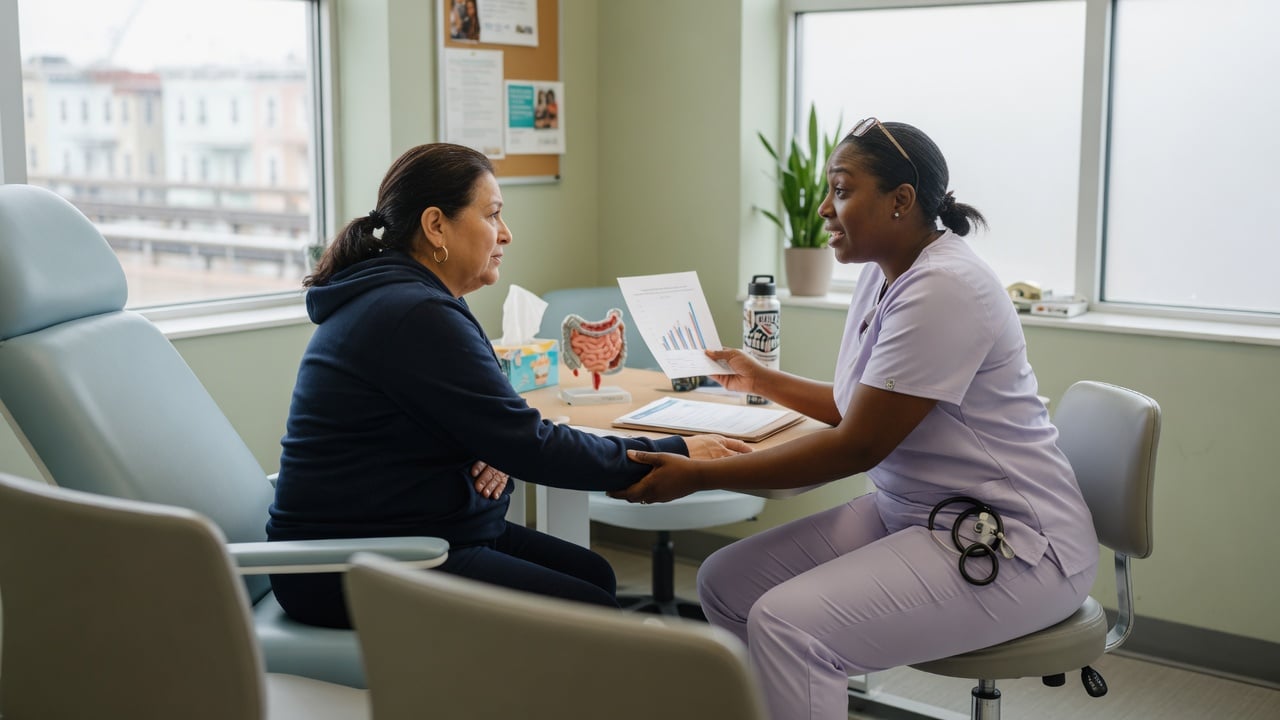
Your first visit with a gastroenterologist is usually a conversation, not a procedure. The doctor will ask about your symptoms, how long they have lasted, what makes them better or worse, and any family history of digestive problems. At IDCC Health, you may see Cynthia Quainoo MD, a gastroenterologist who treats a wide range of stomach and bowel conditions. You do not need to prepare a formal presentation, but it helps to write down your main concerns before you arrive.
The doctor may also perform a physical exam that includes pressing gently on your abdomen. Depending on your symptoms, they might order blood work, stool tests, imaging, or an endoscopy and colonoscopy. Many tests require some preparation ahead of time. For example, you may need to avoid food or drink for several hours. If you are unsure what you can eat or drink beforehand, our article Can I Eat Before a Gastroenterology Appointment? explains the general rules.
You can schedule your visit at 2846 Stillwell Avenue (Coney Island) or at another nearby Brooklyn office, whichever is closer for you. If you were referred by a primary care doctor, feel free to bring their notes or test results. Many patients also see their Primary Care provider before and after their GI visit to keep all parts of their health connected.
- A list of your current medications, including over-the-counter products and supplements
- Details about your symptoms, such as when they started and how often they happen
- Your family history of digestive conditions, if you know it
- Any recent test results or imaging reports from other doctors
- Questions you want to ask, like whether you need a colonoscopy or other screening
Finding a Gastroenterologist in Coney Island and Nearby Brooklyn
If you are looking for a Gastroenterologist in Coney Island or nearby Brooklyn, the Gastroenterology team at IDCC includes Cynthia Quainoo MD. Many patients start with their primary care doctor. Educational resources like MedlinePlus and the NCBI Bookshelf describe the digestive system in plain language.
Appointments are available at our Brooklyn offices, including 445 Kings Highway and 201 Kings Highway. The same team serves patients across southern Brooklyn, so you can choose the location that fits your schedule.
When you book a visit, bring a list of your symptoms, current medications, and any past test results. This helps your gastroenterologist get a clear picture of your digestive health and decide whether any further testing is needed.
Your Digestive Health Care Team at IDCC Health
At IDCC Health, digestive care is a team effort. Cynthia Quainoo MD, a gastroenterologist on our staff, works closely with your Primary Care provider to keep your whole health picture in view. The digestive system includes the stomach, intestines, liver, and pancreas, and problems in these organs can show up as heartburn, belly pain, or changes in bowel habits. Working with both a specialist and a primary care doctor helps you get answers without pieces of your care getting lost.
Your care team may also include other specialists when your symptoms affect more than digestion. If you have questions about which organs a gastroenterologist handles, our article Can a Gastroenterologist Check Your Spleen as Well? explains what falls within a GI specialist's focus, so you know when a different type of doctor may be the right next step. IDCC Health also offers Rehabilitation, Physical Therapy, and Occupational Therapy to support your recovery and daily function. If your symptoms are linked to stress or mental health, a Psychiatry specialist may also be involved. And for overall health, Cardiology and Gynecology services are available as needed.
Appointments are available at our 2846 Stillwell Avenue (Coney Island) office, so you do not have to travel far for expert digestive care. The office is part of the same IDCC Health network, which means your records, test results, and care plan stay connected across visits.
Frequently Asked Questions About Seeing a Gastroenterologist
If you are trying to decide whether your symptoms need a specialist, starting with Primary Care is a common first step. At IDCC Health, Cynthia Quainoo MD is one of the gastroenterologists who helps patients with digestive concerns. The questions below are the ones patients ask most often. They are general guidance, not a replacement for a personal evaluation.
If you have any of the warning signs described earlier, make an appointment soon. A short visit with a gastroenterologist can give you clear answers and a plan.
- Do I need a referral to see a gastroenterologist? It depends on your insurance plan and your doctor's advice. For a detailed answer, read 'Do I Need a Referral to See a Gastroenterologist?'
- Can I eat before my gastroenterology appointment? Some visits require fasting, while others do not. Our guide 'Can I Eat Before a Gastroenterology Appointment?' explains what to expect.
- What should I bring to my first visit? Bring your insurance card, a list of current medications, and any recent test results. Your doctor may also ask about your symptoms and family history.
Related Providers & Services
When to Seek Care Right Away
- Symptoms that are severe, sudden, or rapidly getting worse
- Fever along with pain or other new symptoms
- Chest pain, difficulty breathing, or fainting
- Numbness, weakness, or loss of function in an arm or leg
- Any symptom severe enough to interrupt sleep, work, or daily activities for more than a few days
Sources
Disclaimer: This article is for general educational purposes only and is not a substitute for professional medical advice, diagnosis, or treatment. Always seek the advice of your physician or another qualified health provider with any questions you may have regarding a medical condition.
Questions about your health? We're nearby.
Board-certified providers across 17 specialties — three Brooklyn locations, open Sundays at 445 Kings Highway.
- ✓ Same-week appointments
- ✓ Most major insurance accepted & verified for you
- ✓ Spanish-speaking staff available
Book a visit
We'll call you back to confirm — usually the same day.
Prefer to talk? Call 718-375-3200
When to See a Gastroenterologist in Sheepshead Bay: 10 Warning Signs
Nov 4, 2026When to See a Gastroenterologist in Midwood: Warning Signs and Next Steps
Nov 3, 2026
When to See a Gastroenterologist in Gravesend: 8 Signs You Shouldn’t Ignore
Oct 31, 2026