
Plantar Fasciitis Treatment: Expert Podiatry Care in Brooklyn

By the IDCC Health editorial team
What Is Plantar Fasciitis?
Plantar fasciitis is one of the most common causes of heel pain. It happens when the plantar fascia, a thick band of tissue that runs along the bottom of your foot from your heel to your toes, becomes irritated or inflamed. This tissue supports the arch of your foot and acts like a shock absorber when you walk. When it is overstretched or overused, tiny tears can develop, leading to pain and stiffness. According to MedlinePlus, foot injuries and disorders like plantar fasciitis affect millions of people each year and are a leading reason people visit a foot specialist.
The hallmark symptom of plantar fasciitis is a sharp, stabbing pain near the heel, especially with your first steps in the morning or after long periods of sitting. The pain often eases after a few minutes of walking but can return after prolonged standing or activity. Common causes include wearing shoes with poor arch support, sudden increases in activity (like starting a new running routine), being on your feet for long hours, and having tight calf muscles or a high arch. People who are overweight or have jobs that require standing on hard surfaces are also at higher risk.
At IDCC Health, our [Podiatry](/podiatry-brooklyn-ny.php) team, including specialists like [Mino Abdelmessih DPM](/Mino-Abdelmessih.php), regularly diagnoses and treats plantar fasciitis. If you are experiencing heel pain that does not go away with rest, it is important to see a foot doctor. Early treatment can prevent the condition from becoming chronic. For more on what to expect during a visit, you can read our article on [How Long Does a Podiatry Appointment Take?](https://idcchealth.org/blogs/how-long-does-a-podiatrist-appointment-take/). Our podiatrists see patients at convenient Brooklyn locations, including [445 Kings Highway](/idcc-445-kings-highway-11223.php), to help you get back on your feet.
Common Causes and Symptoms
Beyond the basics, the most common cause of plantar fasciitis is repeated stress on the foot. This often comes from activities that involve a lot of running, jumping, or standing for long hours. Wearing shoes with poor arch support or thin soles can also add strain. Other risk factors include being overweight, having tight calf muscles or a tight Achilles tendon, and having a job that keeps you on your feet all day. Flat feet or high arches can change how your foot absorbs shock, making the plantar fascia work harder. Sometimes, conditions like Achilles tendinitis or heel spurs can occur alongside plantar fasciitis, and a podiatrist like [Mino Abdelmessih DPM](/Mino-Abdelmessih.php) can help tell them apart.
The main symptom is a sharp, stabbing pain near the heel, especially when you take your first steps in the morning or after sitting for a while. The pain often eases after a few minutes of walking but can return after long periods of standing or when you stand up after sitting. Some people also feel a dull ache or burning sensation along the bottom of the foot. The pain may get worse after exercise, not during it. If you notice these signs, it is a good idea to see a podiatrist. At IDCC Health, podiatrists like [Aleksandr Plotkin DPM](/Plotkin.php) and [Merabi Zonenashvili DPM](/Zonenashvili.php) can evaluate your symptoms and create a treatment plan. For more on what to expect during a visit, you can read our article on [How Long Does a Podiatry Appointment Take?](https://idcchealth.org/blogs/how-long-does-a-podiatrist-appointment-take/).
According to MedlinePlus, foot injuries and disorders like this are very common and can affect anyone who spends a lot of time on their feet.
- Sharp heel pain with your first steps in the morning or after rest
- Pain that improves after a few minutes of walking but returns after long periods of standing
- Tenderness when pressing on the bottom of the heel
- Stiffness or aching in the arch of the foot
- Pain that gets worse after exercise, not during it
How a Podiatrist Diagnoses Plantar Fasciitis
Diagnosing plantar fasciitis begins with a detailed history and physical exam. Podiatrists like [Mino Abdelmessih DPM](/Mino-Abdelmessih.php), [Aleksandr Plotkin DPM](/Plotkin.php), and [Merabi Zonenashvili DPM](/Zonenashvili.php) at IDCC Health are skilled at recognizing the hallmark signs. They will ask about your heel pain, especially the first steps in the morning, and press on the bottom of your foot to locate tenderness.
During the exam, the podiatrist may also check your foot strength, flexibility, and walking pattern. If the diagnosis is not clear, imaging such as X-rays or ultrasound can help rule out other problems like stress fractures or heel spurs. MedlinePlus notes that foot injuries and disorders often require imaging for a clear diagnosis. IDCC Health offers these services at convenient locations, including [445 Kings Highway](/idcc-445-kings-highway-11223.php).
Seeing a podiatrist early for persistent heel pain is important. They can tell plantar fasciitis apart from other conditions and start you on the right treatment plan. If you are unsure whether a podiatrist is the right specialist, you can read [Is a Doctor of Podiatry a Real Doctor?](https://idcchealth.org/blogs/is-a-doctor-of-podiatry-a-real-doctor/) for more information.
- Review of your symptoms and medical history
- Physical exam to check for tenderness and range of motion
- Imaging tests (X-ray, ultrasound, or MRI) if needed to confirm the diagnosis
Conservative Treatments: Home Care and Lifestyle Changes
For many people with plantar fasciitis, the first steps to relief happen at home. Conservative treatments focus on reducing inflammation and easing strain on the plantar fascia. The goal is to calm the pain without needing more advanced procedures. According to MedlinePlus, simple measures like rest, ice, and stretching can help manage many foot injuries and disorders. Podiatrists like [Mino Abdelmessih DPM](/Mino-Abdelmessih.php) often recommend starting with these methods because they are safe, low-cost, and can be done by anyone.
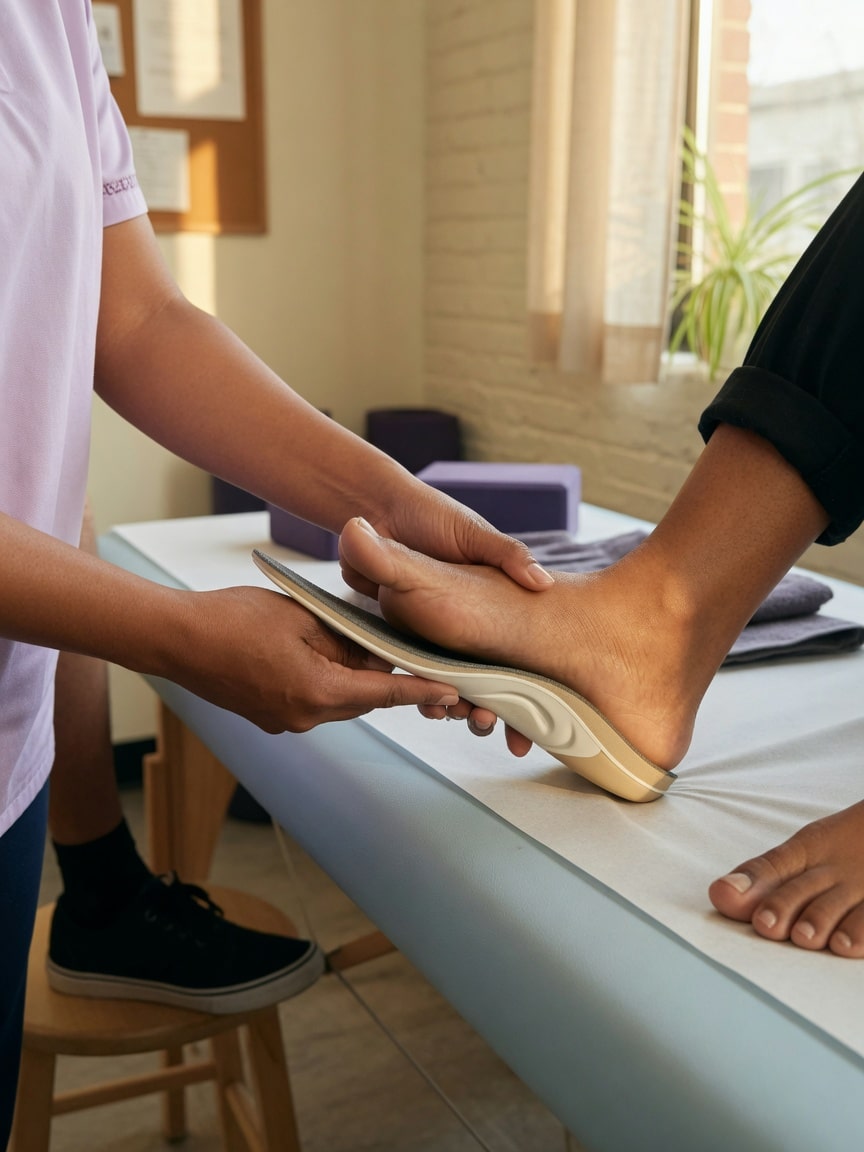
Stretching is one of the most effective home remedies. Gentle calf stretches and towel stretches for the toes can loosen tight muscles that pull on the heel. Rolling a frozen water bottle under the arch for 15 minutes, several times a day, also helps reduce swelling and numb the pain. Over-the-counter pain relievers like ibuprofen or naproxen may provide short-term relief, but they should be used only as directed. Supportive shoes are another key lifestyle change. Avoid walking barefoot on hard floors, and choose shoes with good arch support and cushioned heels. Over-the-counter arch supports or custom orthotics can also take pressure off the heel. [Aleksandr Plotkin DPM](/Plotkin.php) and other podiatrists at IDCC Health can guide you on the right type of support for your foot shape. If home care is not enough, the next step is often [Physical Therapy](/physical-therapy.php), which strengthens the foot and leg muscles to prevent the problem from coming back.
- Rest: Limit activities that make the heel pain worse, such as running or standing for long periods.
- Ice: Apply an ice pack or frozen water bottle to the heel for 15-20 minutes, 3-4 times a day.
- Stretch: Do calf stretches and towel stretches in the morning before taking your first steps.
- Footwear: Wear supportive shoes with good arch support; avoid flat shoes or going barefoot.
- Over-the-counter pain relievers: Use ibuprofen or naproxen for short-term pain, but check with your doctor first.
Advanced Medical Treatments for Plantar Fasciitis
When at-home care and basic treatments do not relieve heel pain, podiatrists like [Mino Abdelmessih DPM](/Mino-Abdelmessih.php), [Aleksandr Plotkin DPM](/Plotkin.php), and [Merabi Zonenashvili DPM](/Zonenashvili.php) at IDCC Health can offer advanced medical options. These treatments target the inflamed plantar fascia more directly and are often covered by insurance. You can learn more about coverage in our article on [Is Podiatry Covered by Insurance?](https://idcchealth.org/blogs/corn-removal-surgery-cost/). One common advanced option is [Physical Therapy](/physical-therapy.php), which uses targeted exercises to stretch the calf muscles and strengthen the foot, reducing strain on the fascia. The [Rehabilitation](/therapeutic-services.php) and Physical Therapy services at IDCC Health work closely with podiatrists to create a personalized plan.
Another effective treatment is extracorporeal shockwave therapy (ESWT). This non-invasive procedure sends sound waves to the heel to stimulate healing and reduce pain. It is often used for chronic plantar fasciitis that has lasted several months. For more stubborn cases, corticosteroid injections can be given directly into the painful area to lower inflammation quickly. Platelet-rich plasma (PRP) injections are also available; this treatment uses a sample of your own blood to concentrate healing factors and inject them into the damaged tissue. These injections are performed at locations such as [445 Kings Highway](/idcc-445-kings-highway-11223.php) or [2846 Stillwell Avenue in Coney Island](/idcc-2846-stillwell-ave-11224.php).
If these methods still do not provide lasting relief, surgery may be considered as a last resort. The most common procedure is a plantar fascia release, where the podiatrist makes a small cut to loosen part of the tight fascia. This is typically done only after months of other treatments have failed. Before any advanced procedure, your podiatrist will discuss all risks and benefits. For comprehensive foot health, your care team may also involve [Primary Care](/primary-care-doctor-in-brooklyn-ny.php) or [Pain Management](/pain-management-brooklyn-ny/) specialists to address underlying issues like obesity or diabetes that can worsen foot pain.
- Physical therapy to stretch and strengthen the foot and calf
- Extracorporeal shockwave therapy (ESWT) to stimulate healing
- Corticosteroid injections to reduce inflammation quickly
- Platelet-rich plasma (PRP) injections using your own blood cells
- Plantar fascia release surgery as a last resort
When Is Surgery Considered?
Surgery for plantar fasciitis is very rare. Podiatrists consider it only after you have tried non-surgical treatments for months without relief. These treatments include rest, ice, stretching, orthotics, physical therapy, and sometimes injections. If severe heel pain still limits your daily activities, your podiatrist may discuss surgery as a final option. At IDCC Health, podiatrists like [Mino Abdelmessih DPM](/Mino-Abdelmessih.php), [Aleksandr Plotkin DPM](/Plotkin.php), and [Merabi Zonenashvili DPM](/Zonenashvili.php) have extensive experience in evaluating whether surgery is appropriate for your foot health.
The most common surgical procedure is a plantar fascia release. This involves cutting part of the tight band of tissue to relieve tension on the heel bone. It is usually done as an outpatient procedure at one of our Brooklyn locations, such as [445 Kings Highway](/idcc-445-kings-highway-11223.php). Recovery time varies, but most people return to normal walking within a few weeks. Your podiatry team will guide you through pre-surgery preparation and post-surgery rehabilitation. Before considering surgery, your doctor may also refer you to other specialties, such as [Pain Management](/pain-management-brooklyn-ny/) or [Physical Therapy](/physical-therapy.php), to exhaust all non-surgical options first.
Finding Expert Plantar Fasciitis Care in Brooklyn
If you are dealing with persistent heel pain, the first step is to see a podiatrist who specializes in foot conditions. At IDCC Health, our [Podiatry](/podiatry-brooklyn-ny.php) team includes experienced doctors like [Mino Abdelmessih DPM](/Mino-Abdelmessih.php), [Aleksandr Plotkin DPM](/Plotkin.php), and [Merabi Zonenashvili DPM](/Zonenashvili.php). They have helped many Brooklyn patients find relief from plantar fasciitis using both conservative and advanced treatments. You can schedule an appointment at one of our convenient locations, including [445 Kings Highway](/idcc-445-kings-highway-11223.php), [2846 Stillwell Avenue in Coney Island](/idcc-2846-stillwell-ave-11224.php), or [201 Kings Highway](/idcc-201-kings-highway-11223.php).
During your visit, your podiatrist will perform a thorough exam and may use imaging to confirm the diagnosis. They will then create a personalized treatment plan that may include stretching exercises, custom orthotics, or [Physical Therapy](/physical-therapy.php). For more complex cases, options like shockwave therapy or platelet-rich plasma (PRP) injections are available through our [Rehabilitation](/therapeutic-services.php) and [Pain Management](/pain-management-brooklyn-ny/) services. If you have questions about insurance coverage, our article [Is Podiatry Covered by Insurance?](https://idcchealth.org/blogs/corn-removal-surgery-cost/) can help you understand what to expect.
Many patients also benefit from a team approach. Your podiatrist may work with your [Primary Care](/primary-care-doctor-in-brooklyn-ny.php) provider or refer you to [Physical Therapy](/physical-therapy.php) for targeted exercises. For related foot issues like heel spurs or Achilles tendinitis, our [Neurology](/neurologist-in-brooklyn-ny.php) and [Cardiology](/cardiology.php) specialists can help if underlying conditions are involved. To learn more about what to expect during a visit, read [How Long Does a Podiatry Appointment Take?](https://idcchealth.org/blogs/how-long-does-a-podiatrist-appointment-take/) and [Is a Doctor of Podiatry a Real Doctor?](https://idcchealth.org/blogs/is-a-doctor-of-podiatry-a-real-doctor/) both provide helpful background. For general foot health information, MedlinePlus offers reliable resources on foot injuries and disorders.
- Call any of our Brooklyn offices to book an appointment with a podiatrist.
- Bring a list of your symptoms, past treatments, and any imaging results.
- Ask about insurance coverage and payment options before your visit.
- Consider combining podiatry care with physical therapy or pain management for best results.
Frequently Asked Questions About Plantar Fasciitis
Here are answers to common questions about plantar fasciitis. If you have heel pain, a podiatrist can help you find the right treatment plan.
- Q: What is plantar fasciitis? A: It is inflammation of the thick band of tissue (the plantar fascia) that runs across the bottom of your foot, often causing stabbing heel pain with first steps in the morning. For more on foot health, see MedlinePlus's foot injuries and disorders page.
- Q: How is plantar fasciitis diagnosed? A: A podiatrist like [Mino Abdelmessih DPM](/Mino-Abdelmessih.php) or [Aleksandr Plotkin DPM](/Plotkin.php) at IDCC Health will examine your foot, ask about your symptoms, and may order imaging tests. You can visit a location such as [445 Kings Highway](/idcc-445-kings-highway-11223.php) for an evaluation.
- Q: What are the best home treatments? A: Rest, ice, gentle stretching, and supportive footwear can help. Over-the-counter pain relievers may also reduce discomfort. If pain continues, your podiatrist may recommend [Physical Therapy](/physical-therapy.php) or other treatments through the [Rehabilitation](/therapeutic-services.php) service at IDCC Health.
- Q: When should I see a podiatrist? A: See a podiatrist if heel pain lasts more than a few weeks, affects your daily activities, or does not improve with home care. A podiatrist can offer advanced options like custom orthotics, shockwave therapy, or injections. For more on what to expect, read our article on [How Long Does a Podiatry Appointment Take?](https://idcchealth.org/blogs/how-long-does-a-podiatrist-appointment-take/).
- Q: Is surgery ever needed for plantar fasciitis? A: Surgery is rarely needed and is only considered after months of non-surgical treatment. A podiatrist like [Merabi Zonenashvili DPM](/Zonenashvili.php) can discuss surgical options if conservative care fails. Most people recover without surgery.
- Q: Does insurance cover podiatry visits? A: Many insurance plans cover podiatry care. Check with your provider or read our article on [Is Podiatry Covered by Insurance?](https://idcchealth.org/blogs/corn-removal-surgery-cost/) for more details.
Related Articles
- How to Remove Corns on Feet Naturally at Home (Overnight & Permanent Solutions)
- What is The Name of The Foot Doctor?
Our Brooklyn Locations
Related Providers & Services
When to Seek Care Right Away
- Symptoms that are severe, sudden, or rapidly getting worse
- Fever along with pain or other new symptoms
- Chest pain, difficulty breathing, or fainting
- Numbness, weakness, or loss of function in an arm or leg
- Any symptom severe enough to interrupt sleep, work, or daily activities for more than a few days
Sources
Disclaimer: This article is for general educational purposes only and is not a substitute for professional medical advice, diagnosis, or treatment. Always seek the advice of your physician or another qualified health provider with any questions you may have regarding a medical condition.
Questions about your health? We're nearby.
Board-certified providers across 17 specialties — three Brooklyn locations, open Sundays at 445 Kings Highway.
- ✓ Same-week appointments
- ✓ Most major insurance accepted & verified for you
- ✓ Spanish-speaking staff available
Book a visit
We'll call you back to confirm — usually the same day.
Prefer to talk? Call 718-375-3200

Bunionette (Tailor’s Bunion): Causes, Symptoms, and Treatment Options
Aug 27, 2026
Bunions: Causes, Symptoms, and Treatment Options in Brooklyn
Aug 25, 2026
What Is Plantar Fasciitis? Symptoms, Causes, and Treatment in Brooklyn
Aug 21, 2026