Gastroenterologist in Brooklyn, New York: What They Treat and How to Prepare

By the IDCC Health editorial team
What Is a Gastroenterologist and What Do They Treat?
A gastroenterologist is a doctor who focuses on the digestive system. This includes the esophagus, stomach, small and large intestines, liver, gallbladder, and pancreas. At IDCC Health in Brooklyn, Cynthia Quainoo MD is a gastroenterologist who helps patients with a wide range of digestive concerns. The Gastroenterology service at IDCC Health is designed to evaluate and manage conditions that affect your gut and related organs. According to MedlinePlus, the digestive system is responsible for breaking down food, absorbing nutrients, and removing waste.
Many Brooklyn adults see a gastroenterologist for symptoms like ongoing heartburn, abdominal pain, bloating, constipation, diarrhea, or changes in bowel habits. These symptoms can point to conditions such as irritable bowel syndrome, acid reflux, or other digestive disorders. However, only a proper medical evaluation can determine the cause. If you are experiencing any of these issues, it is a good idea to talk to a specialist.
- Heartburn or acid reflux that happens often
- Abdominal pain, cramping, or discomfort
- Bloating, gas, or a feeling of fullness
- Constipation, diarrhea, or both
- Unexplained changes in bowel habits
Common Digestive Symptoms That Deserve a Specialist's Evaluation
Many people deal with occasional heartburn, bloating, or an upset stomach. But when these symptoms become frequent or severe, they may point to a problem in the digestive system. At IDCC Health, Cynthia Quainoo MD provides Gastroenterology care at several Brooklyn locations, including 445 Kings Highway and 2846 Stillwell Avenue.
Some symptoms should not be brushed aside. If you have any of the following, it may be time to talk with a specialist:
- Ongoing heartburn or acid reflux that does not improve with over-the-counter remedies
- Stomach pain, cramping, or discomfort that lasts for days or keeps returning
- Frequent gas, bloating, or a feeling of fullness after small meals
- Constipation, diarrhea, or a lasting change in your usual bowel habits
- Blood in the stool or dark, tarry stools
- Trouble swallowing or the feeling that food gets stuck
- Unintentional weight loss without trying
What to Expect at Your First Gastroenterology Visit
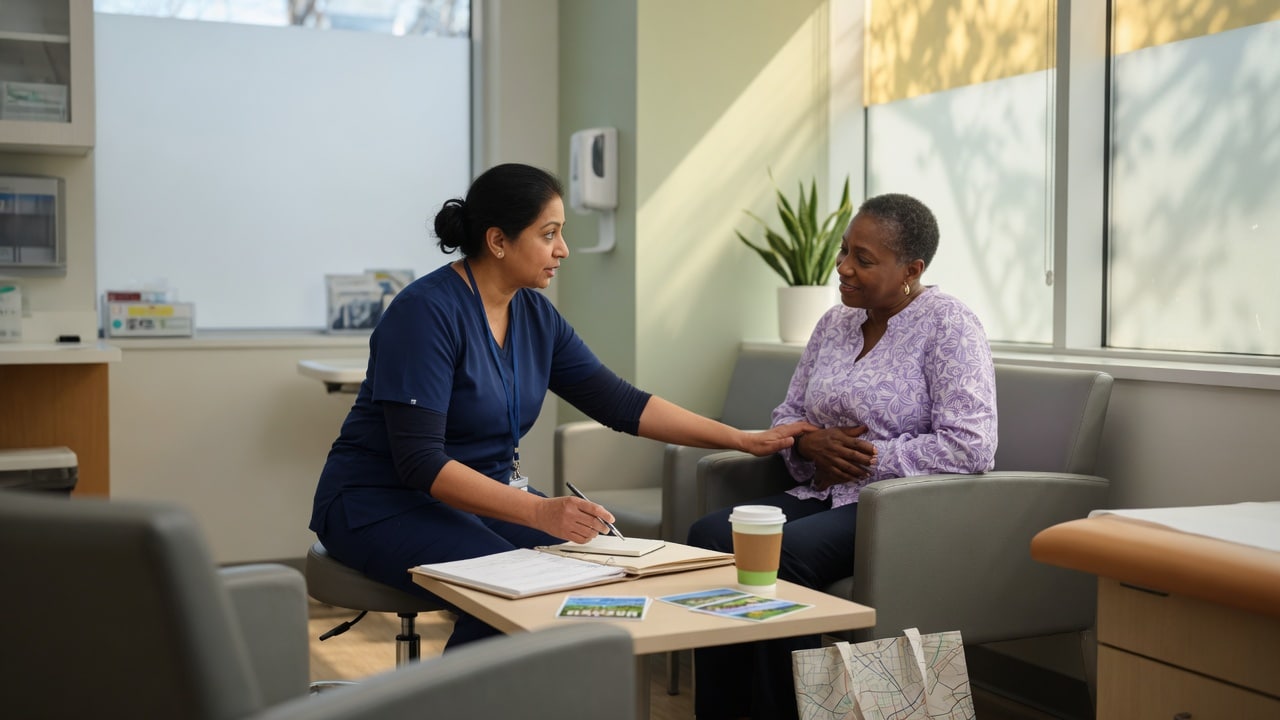
Your first visit with a gastroenterologist is a chance to talk through your symptoms and get a clear picture of your digestive health. At IDCC Health, you'll meet with a specialist like Cynthia Quainoo MD, who will take time to listen to your concerns. You can schedule your appointment at any of our Brooklyn offices, including 445 Kings Highway, 2846 Stillwell Avenue, or 201 Kings Highway. Before the visit, it helps to write down your symptoms, when they started, and any triggers you've noticed.
During the appointment, the doctor will review your medical history, ask about your diet and lifestyle, and discuss any medications you take. A physical exam is usually part of the visit, focusing on your abdomen. Depending on your symptoms, the doctor may recommend blood tests, stool tests, or imaging such as an ultrasound or CT scan. Screening colonoscopy may be recommended for some adults, depending on age and risk factors. Your doctor will discuss the right timing for you. If you're scheduled for a colonoscopy, you'll need to follow specific preparation instructions, which you can read about in our guide, 'Can I Eat Before a Gastroenterology Appointment?'
The goal of the first visit is to understand what's going on and create a plan that fits your needs. You'll have time to ask questions and discuss any worries. If your symptoms point to a condition that needs additional care, the doctor may refer you to other specialists within IDCC Health, such as our Primary Care team for overall health management or our Pain Management service if abdominal discomfort is a major issue. The digestive system is complex, and MedlinePlus offers a helpful overview of how it works. Your gastroenterologist will explain any findings in plain language and outline next steps, whether that means more testing, lifestyle changes, or a treatment plan.
- Review of your medical history and current medications
- Discussion of your symptoms, diet, and lifestyle
- A physical exam, usually focusing on your abdomen
- Possible lab tests or imaging, depending on your situation
- A conversation about screening colonoscopy if you're due
When Do You Need a Referral to See a Gastroenterologist?
Whether you need a referral depends more on your insurance plan than on your symptoms. Many plans in Brooklyn, New York allow you to book directly with a specialist. Others require a referral from Primary Care before a gastroenterologist can see you. A referral is a note from your regular doctor that says specialty care is needed. It also helps the specialist understand your history before you walk in.
You may want a referral if you have ongoing heartburn, stomach pain, bloating, constipation, diarrhea, or changes in bowel habits that do not improve with basic care. A primary care clinician can review your symptoms and order early tests. For a detailed explanation of when a referral is required, read our guide Do I Need a Referral to See a Gastroenterologist? At IDCC Health, Cynthia Quainoo MD provides Gastroenterology care, and the care team can help you schedule a visit that fits your needs.
Preparing for Your Visit: Food, Medications, and Questions
Whether you can eat depends on the type of visit. A routine gastroenterology consultation with Cynthia Quainoo MD usually allows a normal meal. If you have a colonoscopy or another planned procedure, the office will send clear instructions, and those instructions may include fasting or a clear-liquid diet. If no instructions have been sent, call the office before the day. Our guide Can I Eat Before a Gastroenterology Appointment? explains the common rules in plain language.
Bring a detailed medication list to every visit. Write down prescriptions, over-the-counter medicines, vitamins, and supplements, and include anything you take only now and then. Tell the doctor if you take blood thinners or medicine for diabetes, because those may need special planning around a procedure. Do not stop any prescription on your own. Sharing the same list with your Primary Care provider keeps your GI care and your overall health in sync.
A few written questions help make a short visit productive. You might forget them while talking, so keep the list on paper or in your phone. Bring your own questions along with the common ones below.
- What is the most likely cause of my symptoms?
- Which tests do you recommend, and what do they involve?
- Do I need to change what I eat before the next visit?
- Should I stop or adjust any of my medications before a procedure?
- What symptoms should I come back for or seek urgent care?
Can a Gastroenterologist Handle Hernias, Hemorrhoids, or the Spleen?
A gastroenterologist focuses on the digestive system, so some problems that seem related, like hernias, hemorrhoids, or an enlarged spleen, may or may not fall under a GI doctor's care. The answer depends on where the problem is and what kind of treatment it needs.
Hernias are a good example. A hernia happens when tissue pushes through a weak spot in the abdominal wall. A gastroenterologist can help diagnose one, especially if it is causing pain, bloating, or changes in bowel habits. But repairing a hernia usually requires surgery, which is done by a general surgeon. For a closer look at this topic, see our article on whether a gastroenterologist treats hernias. If you have a hernia and digestive symptoms, your primary care doctor can help you decide which specialist to see first.
Hemorrhoids are swollen veins in the lower rectum or anus. They are common and often cause itching, discomfort, or bleeding. A gastroenterologist can evaluate hemorrhoids during a physical exam or a colonoscopy. In some cases, small hemorrhoids can be treated during a colonoscopy, but not all of them can be removed that way. Our guide on whether hemorrhoids can be removed during a colonoscopy explains the details. If bleeding is heavy or persistent, it is important to see a doctor promptly, because bleeding can also come from other parts of the digestive tract.
The spleen is not part of the digestive tract, but it sits near the stomach and can sometimes cause abdominal discomfort. A gastroenterologist may order imaging, like an ultrasound or CT scan, to check the spleen if you have pain in the upper left side of the belly. However, an enlarged spleen is usually managed by a primary care doctor, a hematologist, or another specialist depending on the cause. For more on this, read our article about which doctor treats the spleen. At IDCC Health, your care team can include a gastroenterologist like Cynthia Quainoo MD, along with primary care providers such as Stella Geller DO, so you have support for both digestive and overall health.
- A gastroenterologist can evaluate hernias and hemorrhoids, but surgery for hernias is typically done by a general surgeon.
- Hemorrhoids may be treated during a colonoscopy in some cases, but not all.
- The spleen is not a digestive organ, but a GI doctor can help check it if you have upper abdominal pain.
- If you are unsure which specialist you need, start with a primary care visit to sort out your symptoms.
The Connected Care Team Behind Your Digestive Health
Digestive symptoms rarely stay in one neat category. A stomach ache may come with fatigue, a change in bowel habits may follow a bout of stress, and chest pain can sometimes be mistaken for heartburn when it is actually a heart issue. That is why a gastroenterologist in Brooklyn, New York, often works best as part of a larger medical team. At IDCC Health, the goal is to connect your digestive care with the rest of your health, so nothing gets overlooked.
Your first stop is usually a visit with Cynthia Quainoo MD, a gastroenterologist at the practice. She will take a detailed history, ask about your symptoms, and decide whether you need tests like blood work, imaging, or a colonoscopy. But the conversation does not have to end there. If your symptoms point to a problem outside the digestive tract, she can coordinate with other specialists in the same building. For example, if you have abdominal pain that is hard to control, the pain management team can help. If you have trouble swallowing that seems nerve-related, a neurologist might be involved. And if your digestive issues are tied to stress or anxiety, psychiatry can offer support. This kind of teamwork is what makes a multi-specialty practice useful.
Your primary care doctor also plays a key role. Many people first mention their digestive complaints during a routine checkup. A primary care provider can order basic tests, suggest lifestyle changes, and refer you to a gastroenterologist when needed. At IDCC Health, primary care and gastroenterology are under the same roof, so sharing records and follow-up plans is easier. You can even schedule appointments at any of the practice locations, including 445 Kings Highway, 2846 Stillwell Avenue, or 201 Kings Highway, whichever is most convenient for you.
- Gastroenterology and primary care work together to manage ongoing conditions like acid reflux or irritable bowel syndrome.
- Pain management can help if abdominal pain becomes chronic and hard to treat.
- Neurology may be consulted for swallowing problems or nerve-related gut issues.
- Psychiatry can help when stress or anxiety makes digestive symptoms worse.
- Physical therapy and occupational therapy support recovery after surgery or for movement-related issues that affect daily life.
Finding a Gastroenterologist in Brooklyn: Locations and Next Steps
Finding a gastroenterologist in Brooklyn, New York, is easier when you know where to look. At IDCC Health, you can see Cynthia Quainoo MD, a gastroenterologist who treats conditions of the digestive system. The practice has three convenient Brooklyn locations: 445 Kings Highway, 2846 Stillwell Avenue (Coney Island), and 201 Kings Highway. Because IDCC Health is a multi-specialty practice, you can also connect with a Primary Care doctor for overall health, or see a specialist in Cardiology, Neurology, or Pain Management if your symptoms overlap with other systems.
Before your first visit, check with your insurance about referral requirements and ask about fasting rules. For more details, see our guides on referrals and eating before an appointment. For a general overview of the digestive system, MedlinePlus: Digestive System offers a reliable resource. If you want deeper medical information, the NCBI Bookshelf provides peer-reviewed textbooks. After the appointment, your gastroenterologist may work with other IDCC Health specialists, such as a Pain Management expert for abdominal discomfort or a Physical Therapy provider for movement-related recovery.
- Check your insurance coverage and confirm which location you prefer: 445 Kings Highway, 2846 Stillwell Avenue (Coney Island), or 201 Kings Highway.
- Gather your medical history, including past tests, surgeries, and any family history of digestive conditions.
- Bring a list of current medications, supplements, and allergies.
- Follow any pre-visit instructions about fasting or bowel preparation, and ask about eating rules beforehand.
- Arrive 15 minutes early to complete paperwork and ask any last-minute questions.
Related Articles
- Does a Gastroenterologist Treat Hernias?
- Can a Gastroenterologist Check Your Spleen as Well?
- Can Hemorrhoids Be Removed During a Colonoscopy?
Related Providers & Services
When to Seek Care Right Away
- Symptoms that are severe, sudden, or rapidly getting worse
- Fever along with pain or other new symptoms
- Chest pain, difficulty breathing, or fainting
- Numbness, weakness, or loss of function in an arm or leg
- Any symptom severe enough to interrupt sleep, work, or daily activities for more than a few days
Sources
Disclaimer: This article is for general educational purposes only and is not a substitute for professional medical advice, diagnosis, or treatment. Always seek the advice of your physician or another qualified health provider with any questions you may have regarding a medical condition.
Questions about your health? We're nearby.
Board-certified providers across 17 specialties — three Brooklyn locations, open Sundays at 445 Kings Highway.
- ✓ Same-week appointments
- ✓ Most major insurance accepted & verified for you
- ✓ Spanish-speaking staff available
Book a visit
We'll call you back to confirm — usually the same day.
Prefer to talk? Call 718-375-3200

Gastroenterology in Brooklyn: Expert Care for Your Digestive Health
Sep 9, 2026
Gastroenterology in Brooklyn, NY: Expert Digestive Care at IDCC Health
Sep 4, 2026
What Causes Bloating? Common Triggers and When to See a Gastroenterologist
Aug 7, 2026