When to See a Physical Therapist in Coney Island: 9 Signs You Shouldn’t Wait

By the IDCC Health editorial team
When Should You See a Physical Therapist?
Many people put off physical therapy because they think pain will fade on its own. Sometimes it does. But when pain, stiffness, or weakness lingers, waiting usually makes recovery slower and harder. Physical therapy is a safe, active approach that helps you restore movement, build strength, and prevent future problems. At IDCC Health, Dr. Irina Shammay leads a Physical Therapy team that starts with a full evaluation and builds a plan around your daily life. MedlinePlus lists exercise and physical fitness as key to staying independent and preventing falls.
So when is it time to make an appointment? A good rule is to pay attention when symptoms interfere with normal activities. Consider seeing a physical therapist if you have any of these signs:
Some symptoms need medical attention first. Severe pain, sudden weakness, chest pain, trouble breathing, or loss of bladder control are red flags. In those cases, contact your Primary Care doctor or go to urgent care before starting physical therapy. For everyday muscle aches and pains, our guide to What Doctor Do You See for Muscle Pain? can help you decide who to call first. Your first visit does not require a referral from a specialist, though many people come from their primary care doctor. If you have been inactive for a while, our guide to How to Start Exercising After Being Sedentary pairs well with a physical therapy plan, because PT helps you build strength gradually.
- Pain that lasts more than a few days or keeps coming back
- Stiffness that makes daily tasks like bending, reaching, or dressing harder
- Weakness in an arm or leg that does not improve
- Balance problems or a feeling of unsteadiness
- Trouble walking, climbing stairs, or getting up from a chair
- Recovery after a surgery, injury, or a long illness

9 Signs You Shouldn't Wait
Some aches and pains fade on their own. Others are your body's way of telling you it needs help. Physical Therapy can improve movement, reduce pain, and help you avoid bigger problems later.
The nine signs below are general guidance, not a diagnosis. If you have severe pain, sudden weakness, chest pain, or trouble breathing, seek medical care right away. For milder symptoms, your Primary Care doctor can help you decide if physical therapy is the right next step. Family doctors often recommend seeing a doctor for pain that interferes with daily life.
If any of these signs sound familiar, you do not have to wait until the pain becomes unbearable. Early help often leads to faster recovery. The team at IDCC Health, led by Dr. Irina Shammay, works with you to build a personalized plan. If you have been inactive for a while, our guide on How to Start Exercising After Being Sedentary can help you ease back in safely. Our Brooklyn offices are available to help you move better and feel stronger.
- Pain that lasts more than a few days
- Stiffness that limits daily tasks
- Weakness in an arm or leg
- Balance problems or unsteadiness
- Difficulty walking or climbing stairs
- Pain that keeps you from sleeping
- Recovery after surgery or injury
- Numbness or tingling that does not go away
- Avoiding activities you used to enjoy because of pain
What to Expect at Your First Physical Therapy Visit
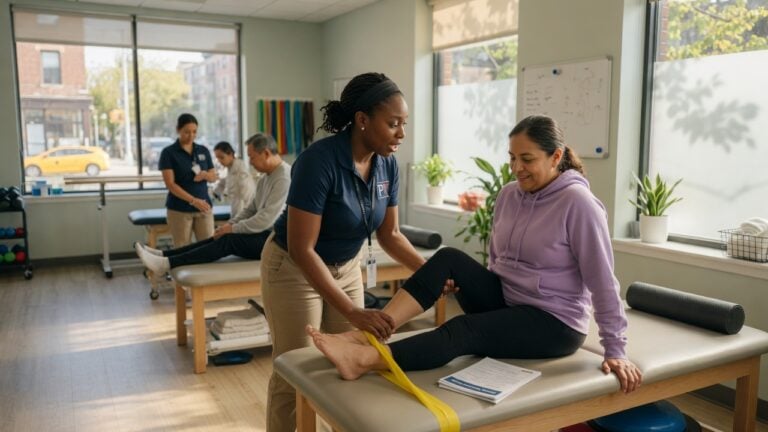
Your first physical therapy visit is an evaluation, not a workout. A physical therapist will ask about your pain, your daily activities, and your health history. Then they will watch how you move. They may check your range of motion, which means how far a joint can move, as well as your strength and balance. This helps them find the cause of your problem, not just the symptoms.
At IDCC Health, your evaluation may be with Dr. Irina Shammay or Daniel Lerner PT DPT OMT. The physical therapy team also includes Dina Israelov and Dr. Jaroslaw Cwar PTA. They often coordinate with other services. If your weakness comes from a nerve problem, they may work with Neurology. If you have heart disease, your plan may involve Cardiology. Physical Therapy is a core part of Rehabilitation, and for stubborn pain it often works alongside Pain Management. If your insurance requires a referral, your Primary Care doctor can help.
After the evaluation, you will get a personalized plan. The plan may include exercises to do at home. If you have been sedentary, you can start slowly. Our guide, How to Start Exercising After Being Sedentary, explains why gradual progress matters. A physical therapist can also help you understand What Happens When You Start Exercising After Being Sedentary, so you know which soreness is normal. If you are still unsure whether your muscle pain needs a doctor, our article, What Doctor Do You See for Muscle Pain?, can help. Before your visit, tell the office about any red flags. Severe pain, numbness, chest pain, or sudden weakness should be checked by a doctor first. You can schedule at 445 Kings Highway, 201 Kings Highway, or our Stillwell Avenue office.
- A list of your current medications and any supplements
- Imaging reports or referral notes, if you have them
- Comfortable clothing and shoes you can move in
- Questions about your pain, goals, or daily activities
Common Conditions Physical Therapy Can Help Treat
Physical therapy is one of the most versatile services for restoring movement and easing pain. People often picture it for sports injuries, but it also helps with everyday aches, stiffness, and weakness. At IDCC Health, Physical Therapy is part of a broader Rehabilitation program. Together, the team builds a personalized plan around your specific limitations and goals.
The most common conditions physical therapy addresses are muscle and joint problems. Low back and neck pain, arthritis, tendonitis, strains, sprains, and recovery after surgery can all improve with guided exercise and manual therapy. If you have pain that lasts longer than a few days, our guide, What Doctor Do You See for Muscle Pain?, can help you sort through your options. Physical therapy often works alongside Pain Management, and a Primary Care provider can help decide whether a referral makes sense. Physical therapy is a common, evidence-based option for many musculoskeletal issues.
Physical therapy also supports recovery from more serious health events. After a stroke, people may work with a therapist to regain strength, balance, and coordination, often with input from Neurology. After a heart procedure, a supervised Physical Therapist can help you rebuild endurance safely under the guidance of Cardiology. Some women also benefit from physical therapy for pelvic floor concerns, and a Gynecology team can help connect them with this care. The goal is gradual progress, not quick fixes. Our guide to What Happens When You Start Exercising After Being Sedentary explains why steady, guided movement matters.
Common conditions physical therapy can help treat include:
- Low back and neck pain
- Arthritis and joint pain
- Sports injuries and muscle strains
- Recovery after surgery or a hospital stay
- Balance problems and fall prevention
- Weakness after a stroke or other neurological condition
- Pelvic floor concerns
How Physical Therapy Works With Your Other Doctors
Physical therapy works best when it is part of a team. At IDCC Health, Dr. Irina Shammay leads the physical therapy team and often coordinates with your Primary Care doctor. This means your therapist and your doctor share notes about your pain, your progress, and your goals. If you see a specialist, that information can be shared with them too.
For example, after a heart problem, a cardiologist may suggest a supervised exercise program. Your physical therapist can design a safe, gradual plan and send updates to your Cardiology team. For nerve-related weakness, a therapist may work with a neurologist to improve balance and strength. This kind of coordinated care is a core part of Rehabilitation. According to MedlinePlus, rehabilitation helps people regain skills that were lost because of injury or illness.
Your first visit usually starts with an evaluation. The therapist watches how you move, asks about your daily activities, and builds a plan around your needs. If your symptoms get worse or something new appears, the therapist can send you back to your doctor. That is why it is important to report any severe pain, numbness, chest pain, or sudden weakness before starting or continuing PT. Regular movement, guided by a professional, is one of the safest ways to rebuild strength.
Why Starting Early Makes a Difference
When pain or stiffness lingers for more than a few days, it is tempting to wait and see if it goes away. But the longer you wait, the more your body adapts to the problem. You might start walking differently, favoring one side, or avoiding certain movements. Over time, these habits can lead to new aches in your back, hips, or knees. Starting physical therapy early can help you break that cycle before it becomes a long-term pattern.
Physical therapy is a core part of rehabilitation. A physical therapist evaluates how you move, where you feel pain, and which daily tasks have become difficult. Then they build a plan to strengthen weak muscles, improve balance, and restore range of motion. The goal is not just to feel better today, but to build strength gradually so you can stay active. If you have been sedentary for a while, this gradual approach is especially important. Our guide, How to Start Exercising After Being Sedentary, explains how to ease back into movement safely. At our clinic, the physical therapy team, including Dr. Irina Shammay and Daniel Lerner PT DPT OMT, works with you one-on-one to create a plan that fits your life.
Early physical therapy can also help after an injury or surgery, and it often works well alongside other types of care. For example, someone recovering from a heart problem may need Cardiology, while someone with nerve-related weakness may benefit from a Neurology evaluation. If you are unsure where to start, a Primary Care visit can help you figure out the cause of your symptoms and whether physical therapy is the right next step. To learn more about what to expect, you can visit the Physical Therapist in Coney Island page. The team sees patients at 2846 Stillwell Avenue, 445 Kings Highway, and 201 Kings Highway, so getting started is convenient.
Finding a Physical Therapist in Coney Island
Knowing when to see a physical therapist can be confusing. A good rule of thumb is to seek an evaluation if pain lasts more than a few days, stiffness limits your daily tasks, or you notice new weakness or balance problems. Persistent or severe symptoms, such as chest pain or sudden weakness, should be checked by a doctor first. At IDCC Health, the Physical Therapy team, led by Dr. Irina Shammay, starts with a thorough assessment to understand your specific situation.
Your first visit typically includes a movement assessment and a conversation about your goals. From there, your therapist builds a personalized plan to help you move better and build strength gradually. According to MedlinePlus, exercise and physical fitness can improve balance and strength, which is why physical therapy often includes a home exercise plan. If you have been inactive for a while, it is important to start slowly. Our guide on how to start exercising after being sedentary explains why a gradual approach works best.
If you are looking for a Physical Therapist in Coney Island, IDCC Health offers care at the 2846 Stillwell Avenue office in the neighborhood, as well as at 445 Kings Highway and 201 Kings Highway. Early intervention often leads to better outcomes, so reaching out when you first notice a problem can make a real difference.
Frequently Asked Questions
How do I know if physical therapy is right for me? If pain, stiffness, weakness, or balance problems last more than a few days or make daily tasks harder, physical therapy may help. If symptoms are severe or persistent, start with Primary Care to rule out other causes.
What happens at the first visit? A physical therapist evaluates your movement, strength, and goals, then builds a plan with you. At our clinic, Dr. Irina Shammay and Daniel Lerner PT DPT OMT work as part of a team that focuses on your recovery.
Do I need a referral, and where do I go? Many people can book physical therapy directly, but check your insurance first. If you have severe pain, chest pain, sudden weakness, or numbness, see a doctor before starting physical therapy. Family doctors often recommend physical therapy for musculoskeletal pain. You can visit us at 445 Kings Highway to get started.
Related Articles
- Is Physical Health More Important Than Mental Health?
- Why Is My Penis Shrinking? Causes, Prevention, and Solutions
Our Brooklyn Locations
When to Seek Care Right Away
- Symptoms that are severe, sudden, or rapidly getting worse
- Fever along with pain or other new symptoms
- Chest pain, difficulty breathing, or fainting
- Numbness, weakness, or loss of function in an arm or leg
- Any symptom severe enough to interrupt sleep, work, or daily activities for more than a few days
Sources
- MedlinePlus: Rehabilitation
- MedlinePlus: Exercise and Physical Fitness
- AAFP: American Family Physician
Disclaimer: This article is for general educational purposes only and is not a substitute for professional medical advice, diagnosis, or treatment. Always seek the advice of your physician or another qualified health provider with any questions you may have regarding a medical condition.
Questions about your health? We're nearby.
Board-certified providers across 17 specialties — three Brooklyn locations, open Sundays at 445 Kings Highway.
- ✓ Same-week appointments
- ✓ Most major insurance accepted & verified for you
- ✓ Spanish-speaking staff available
Book a visit
We'll call you back to confirm — usually the same day.
Prefer to talk? Call 718-375-3200
Physical Therapy vs Occupational Therapy: A Brooklyn Patient’s Guide
Sep 26, 2026
What Happens When You Start Exercising After Being Sedentary
May 12, 2026
How to Start Exercising After Being Sedentary
Apr 18, 2024